Get Full Government Meeting Transcripts, Videos, & Alerts Forever!
Get email alerts on the Homelessness topic
No spam. Unsubscribe anytime.
Safe Harbor tells commissioners $500,000 cuts imperil local shelter services; urges city support
Summary
Anne Perkins, executive director of Safe Harbor, told the Ashland commission that state and federal cuts will reduce her organization's budget from about $2.7M to $2.5M this year, requiring program adjustments and local planning to meet rising homelessness and domestic-violence needs.
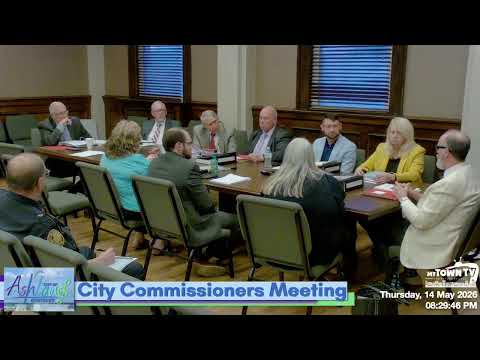
Anne Perkins, executive director of Safe Harbor, told the Ashland City Commission on May 14 that the nonprofit faces unprecedented funding reductions and a possible $500,000 shortfall this year, and she urged the city to prepare to support people affected by the cuts.
"We have been cut $500,000 from our last year's budget. This is the first time in our history that we have experienced the kinds of cuts that we have," Perkins said. She described Safe Harbor’s operations: roughly 150 people served per day, 60 emergency beds, 30 transitional beds, and 34 Section 8 project-based apartments managed in partnership with the city.
Perkins said state-level and federal grant changes—including potential terminations of several federal grants addressing domestic violence and victim services—could have national reach if stays are not sustained. "If those stays do not hold up, everybody in the United States will be affected," she said, warning that local providers must plan now for increased demand.
Commissioners responded with praise for Safe Harbor’s work and commitments to consider the city’s role in supporting homelessness services. Several commissioners and public commenters described a growing network of local partners—Welcome House, House of Grace, United Way and other nonprofits—aimed at filling gaps in outreach, case management and job-readiness supports.
Perkins asked the commission to keep local nonprofit needs in mind as the city finalizes its budget and noted the human toll: Safe Harbor staff have seen clients lose SNAP and Medicaid support and anticipated additional strain on working-poor families. The commission thanked Safe Harbor for decades of service and said staff would factor the testimony into budget and service planning.