Get Full Government Meeting Transcripts, Videos, & Alerts Forever!
Get email alerts on the Public Safety topic
No spam. Unsubscribe anytime.
Fire officials warn Lake Clarke Shores: lithium batteries pose growing fire hazard
Summary
Palm Beach County Fire Rescue educators demonstrated thermal runaway risks from lithium and lithium‑ion batteries, urged residents to tape terminals and take spent batteries to household‑hazard collection or retailers, and described new suppression tools for EV fires.
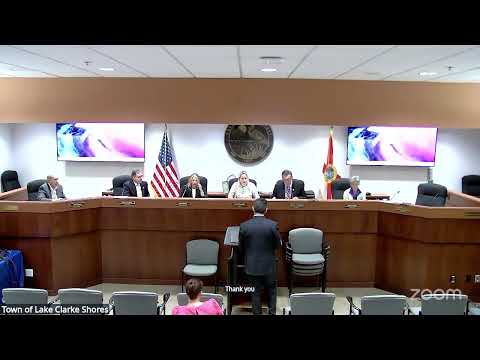
Palm Beach County Fire Rescue educators told the Lake Clarke Shores Town Council on Tuesday that lithium and lithium‑ion batteries are a growing source of residential and vehicle fires and described steps residents should take to reduce risk.
"Avoid throwing them in household trash," said Elise Carheart, a community educator with Palm Beach County Fire Rescue, who led a demonstration and explained how both single‑use lithium cells and larger rechargeable lithium‑ion packs can fail and trigger thermal runaway. Carheart walked council and residents through labeling cues, charging best practices, safe disposal (tape terminals, use Home Chemical Recycling Centers or major retailers such as Batteries Plus or big-box stores), and emergency precautions.
Carheart and a colleague showed video and described in-field demonstrations of thermal runaway and EV battery failures. They emphasized that suppression of an electric‑vehicle or large lithium‑ion fire can require very large amounts of water and specialized tactics. "Water is still the best" suppression tool for many lithium‑ion incidents, they said, but noted the unique toxic off‑gassing and the potential for weeks of stranded energy in damaged cells.
Fire leaders urged residents to charge devices on hard surfaces, avoid leaving batteries or chargers unattended overnight, discard recalled or damaged batteries per manufacturer guidance, and tape battery terminals before transport. For batteries showing signs of failure—the presenters noted swelling, heating, unusual odor or smoke—they said residents should contact Solid Waste Authority staff at staffed Home Chemical Recycling Centers to accept such items. Carheart described a product called "cell block" used at collection sites to isolate individual cells for safe pickup by contractors.
Chief Martinez and other public‑safety officials discussed new tools the fire service is adopting, including a high‑pressure, low‑volume cutting/stream device (described in the presentation) that can penetrate vehicle compartments and apply water directly to cells; presenters said that tool can extinguish EV fires using far less water than conventional approaches.
Council members thanked the presenters and asked that the town post links and guidance (the presenters referenced pbcfr.org and a YouTube demonstration) on the municipal website for residents.