Get Full Government Meeting Transcripts, Videos, & Alerts Forever!
Get email alerts on the City Budget topic
No spam. Unsubscribe anytime.
PFM warns Erie faces multimillion-dollar budget gap tied to pension accounting; city plans audits and $3M immediate cuts
Summary
A PFM assessment presented to the Erie City Council warns of a projected $12.3 million deficit next year driven largely by a mismatch between pension-restricted revenues and budgeted pension expense; the mayor said the city will pursue management audits and an immediate $3 million reduction while seeking community and intergovernmental support.
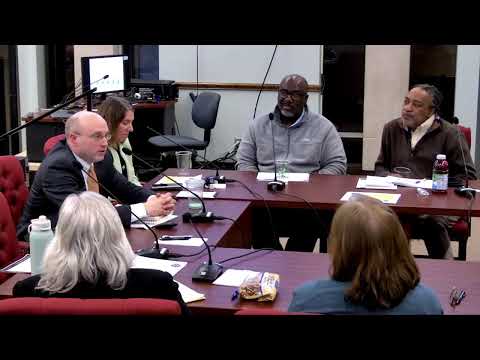
PFM consultant Gordon Man told the Erie City Council that, under a no-action baseline, the city faces a projected $12.3 million budget shortfall next year driven mainly by a mismatch between pension-restricted revenues and the pension expense shown in the budget. "This is the diagnosis, this is how sick we are," Man said as he walked council through cash, fund balance and long-term projections.
Man described the fiscal problem as a "three-headed" challenge — pension obligations, rising debt service and a flat real-estate tax base — and said the city’s cash position is currently stable (cash reportedly rose from about $20 million in 2021 to roughly $34 million in 2024). He explained that while some revenue (including a distress-pension earned-income tax and state pension aid) is legally restricted to pensions, the budget lists a lower minimum municipal obligation (MMO), producing an $8–9 million gap that is the largest driver of next year’s shortfall.
Mayor Daria said the administration will press for both short- and long-term remedies. "My number in my head is $3 million," she said, describing an immediate consolidation of management and non-bargaining positions and line-item reviews while PFM conducts deeper management audits promised for August that will inform the 2027 budget.
Man also cautioned council that nonrecurring revenues that produced recent surpluses will not be available indefinitely. He cited one-time sources that improved recent results: federal American Rescue Plan Act (ARPA) funds used in 2021–22 and a large upfront payment from a water-lease prepayment to Erie Waterworks. Those proceeds temporarily lowered near-term debt service but will taper, reducing recurring revenue by roughly $3–4 million in later years under the baseline projection.
Council members pressed for clearer budgeting and better transparency in future budget documents after several said they had not seen the restricted-pension revenue aligned with pension expense in prior budget presentations. One council member said the omission felt like a serious oversight and raised concerns about accountability to constituents.
Council discussion also identified near-term and structural options the city will pursue: tighter expense controls focused first on management positions, engagement with nonprofit and business leaders to explore revenue support for critical items such as police technology (Axon body-camera systems), and lobbying Erie County for a countywide reassessment of property values to expand the tax base.
PFM emphasized the work ahead is diagnostic and actionable: the firm will return with management-audit findings and recommendations to help craft the 2027 budget. The mayor said materials from the presentation will be posted online, that employee and community town halls are planned, and that the administration will keep council updated on staffing and revenue proposals. The study session closed with council expressing commitment to follow-through and additional public engagement.
The session included multiple technical details about fund balance benchmarks, actuarial assumptions affecting the MMO, headcount growth and the timing of debt-service cliffs created by earlier prepayments; the presentation and Q&A did not include formal motions or votes. The council concluded the session with a pledge to use the PFM work and the $3 million near-term effort to begin closing the projected gap.