Get Full Government Meeting Transcripts, Videos, & Alerts Forever!
Get email alerts on the Education Funding topic
No spam. Unsubscribe anytime.
Senate passes compensatory aid update and $5M for anonymous threat reporting
Summary
The Senate passed House File 2433, which adjusts compensatory aid calculations for fiscal 2027 and includes $5 million for anonymous school threat‑reporting systems (with $1 million to BCA and $4 million for grants), along with other education funding adjustments.
The Minnesota Senate approved House File 2433, a conference committee package that modifies compensatory aid calculations for fiscal 2027 and provides targeted funding for school safety and other education items.
Sen. Zach Cwodzinski, a presenter of the conference report, emphasized his background in education and framed the bill as a set of pragmatic, targeted investments. "As a career educator... I've spent more time in the classroom with more students... and it never feels good when people say our schools are hurting," he said on the floor as he urged support for the bill.
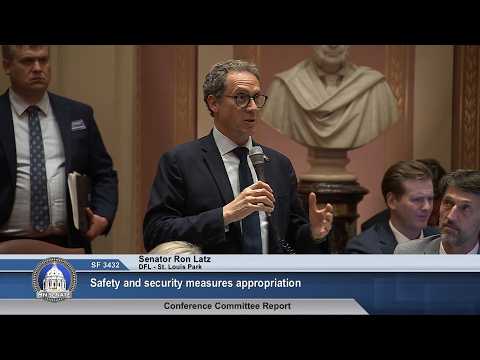
The conference report contains a one‑year partial hold‑harmless for compensatory aid calculations, reforms that allow districts additional flexibility in building allocations, and a safety provision that funds a statewide anonymous threat‑reporting system. The package includes a $5 million appropriation for anonymous threat reporting systems for schools—$1 million to the Bureau of Criminal Apprehension to stand up statewide capacity and $4 million in grants to help districts purchase systems or pay for training and staff associated with the systems.
Floor discussion recognized the limited dollars but stressed the immediate need for support for districts facing budget shortfalls and teacher losses; several senators said the funding will not fully close gaps but will help targeted programs. On final passage the bill was reported adopted by a roll call of 53 yeas and 14 nays.
Next steps: the enacted provisions will be carried into the budget and implemented by the Department of Education and the Bureau of Criminal Apprehension for the threat-reporting elements.