Get Full Government Meeting Transcripts, Videos, & Alerts Forever!
Get email alerts on the School Budget topic
No spam. Unsubscribe anytime.
Hillside board debates 6% tax levy as $4.37 million charter‑school hit and tight deadlines shape budget
Summary
At a May special meeting, Hillside Public School District leaders defended a proposed 6% tax levy that includes a mandatory $4.37 million charter‑school payment, saying state deadlines limit options; board members and residents pressed for clearer line‑by‑line budget data and warned of state intervention if a budget fails to upload by May 14.
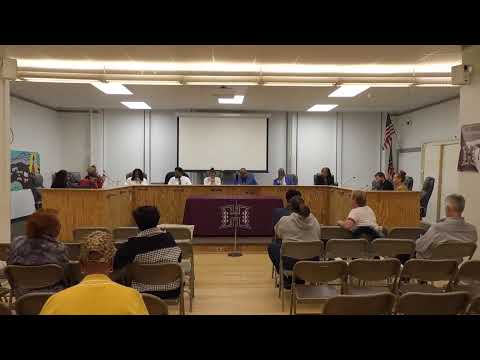
HILLSIDE — Board members and district officials at a May special meeting focused on a proposed budget that would raise the tax levy 6%, a package district staff say is constrained by a mandatory $4.37 million charter‑school payment and fast state deadlines.
The district’s business administrator told the board the charter amount "represents a 4.37 million dollar hit against the budget" and that the charter must be included "whether or not they're here," which greatly reduces the district’s ability to reach a 4% levy without deeper cuts or closing schools.
That timing matters: officials said the budget must be uploaded into county budget software by May 14 for township certification, and the state has until June 30 to decide whether to approve or deny a charter application. The BA warned that if the board fails to pass an approvable budget, the state could either approve the proposed levy unilaterally or send a state monitor — an outcome the BA described as costly to the district.
Residents and board members repeatedly pushed staff for more detailed budget materials. One director said members were being asked to make a decision "based on 70% of information," and several asked why full line‑by‑line documents and the top‑level analysis had not been received earlier.
The BA outlined the district’s approach: preserve student programs where possible, avoid closing schools, and achieve savings through consolidation, attrition and targeted non‑renewals. He said prior staffing reductions reduced positions from roughly 47 to 21 through attrition and transfers, and that some apparent salary increases on paper reflect the transfer of staff into different grade‑level bands while larger decreases occurred in middle‑ and high‑school salary bands.
Board members asked whether a strategy of applying a recurring 2% levy each year would close the structural deficit. The BA said a straight 2% annual increase would be a “best guess” to approach a multi‑year deficit reduction, but cautioned that expenses (healthcare, tuition, modular‑unit payments and contractual salary obligations) often rise faster than 2% and would likely require additional cuts or revenue beyond the levy.
Officials also described restricted timing and administrative constraints. The BA said the audited preschool carryover and other figures are provided by auditors and that the state discourages large carryovers by reducing allowable budget authority by 25% in some circumstances. On the risk of state action, the BA said the state ‘‘could unilaterally just approve the budget as is’’ or place a monitor, depending on state determinations.
Next steps: the board recessed to executive session to discuss personnel, labor negotiations and related items. The public session will reconvene if and when confidentiality no longer applies.
Speakers quoted in this article appear in the meeting record and include the district business administrator and multiple board members; residents raised related concerns during public comment.