Get Full Government Meeting Transcripts, Videos, & Alerts Forever!
Get email alerts on the Cement Plant Readymix topic
No spam. Unsubscribe anytime.
Proposed ReadyMix cement plant draws scrutiny over truck routing, silos and visual impact
Summary
Planning-board members flagged safety and enforcement problems with a traffic-mitigation plan that would reroute heavy trucks through neighboring roads, questioned the sufficiency of a modest "fair-share" fee, and noted the proposed 70–75-foot silos will likely require ZBA height variances and visual-impact analysis.
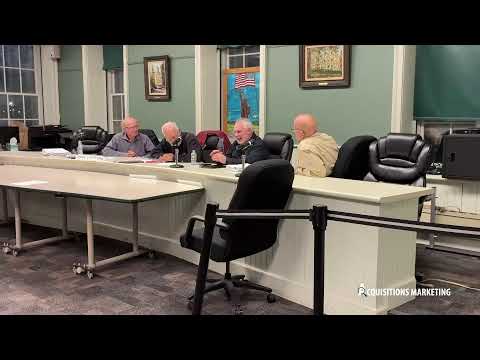
Members of the planning board spent a substantial portion of the meeting on a proposed ReadyMix (cement) plant and associated truck terminal, raising concerns on traffic mitigation, silo height and community impacts.
Traffic: John Canning, the project's traffic consultant, proposed mitigation that would route trucks away from a direct left turn onto Musket Court — routing them instead via Lower Road and other local connectors. Several board members and an attending supervisor from a neighboring town said the plan effectively shifts safety and wear-and-tear risks onto another municipality. Board members asked for a formal level-of-service analysis of the affected intersections (17M/Lower Road/Denton Hill) and questioned whether small fair-share fees (figures discussed ranged from $10,000 to $25,000 in the transcript) would secure the needed road improvements or be enforceable over time.
Silos and zoning: The applicant's plan shows multiple silos, described in the meeting as roughly 70–75 feet tall; the industrial-zone height limit is 45 feet. Board members agreed the proposal will likely require a zoning variance from the Zoning Board of Appeals and asked for more detail on silo width, dust-control equipment, and lighting. One member noted that silos can be visually mitigated by berms and trees; the applicant reportedly offered to paint silo exteriors green to reduce contrast against the treeline.
Environmental and operational safeguards: Presenters reported a completed SWIP and a claim of no expected runoff impacts. Tree-clearing was described as scheduled after Nov. 1 to protect bat species, on-site domestic water will be tested by the town, and the applicant proposes a 10,000-gallon aboveground double-walled fuel tank. The planning board issued a conditional SEQR negative declaration at its meeting, specifically pending the traffic consultant John Canning's signoff on the traffic mitigation analysis.
Community reaction and next steps: Board members expressed skepticism that the proposed mitigation can be practically enforced and urged engagement with the neighboring town (Wayando), DOT, and county road officials to verify posted weight limits and road capacities. Suggested follow-ups include a truck-turning demonstration, a more detailed level-of-service traffic study, verification of road weight limits, and a fuller review of the silos' visual profile ahead of any variance filing.
Why it matters: The decision implicates public safety on local and neighboring roads, possible long-term pavement damage, and a visible industrial structure near ridge lines and residential neighborhoods; the planning board conditioned its environmental finding on further traffic review.