Get Full Government Meeting Transcripts, Videos, & Alerts Forever!
Get email alerts on the Public Policy topic
No spam. Unsubscribe anytime.
Council adopts content‑neutral temporary sign rules to comply with Reed v. Gilbert
Summary
Big Bear Lake amended its sign code to treat temporary non‑commercial signs equally, clarify maintenance and appeals, allow year‑round temporary signs within objective limits (three signs or 96 sq ft cumulative; max 32 sq ft per sign), and streamline enforcement to a hearing officer. Council cited Reed v. Gilbert as guidance for content neutrality.
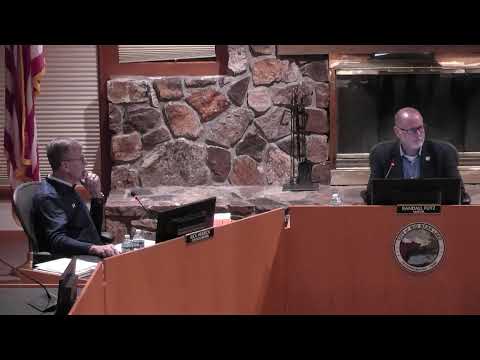
The Big Bear Lake City Council conducted a public hearing May 13 and introduced an ordinance amending portions of the development code on temporary non‑commercial signs (Dev. Code Amendment 2025‑00005), then voted to advance the ordinance consistent with the first reading.
City attorneys said recent U.S. Supreme Court precedent requires content neutrality in regulating temporary non‑commercial signage; the updated code defines temporary non‑commercial signs to include political, religious, civic, educational and similar signs and applies objective time, place and manner limits rather than content‑based restrictions. The proposal clarifies enforcement: alleged violations will produce a courtesy notice; unresolved violations may become administrative citations and appealable to a hearing officer rather than the Planning Commission. Removed signs will be stored at City Hall for 30 days.
Council members asked staff about practical concerns, including notice timing for second‑home owners and how maintenance standards will be applied. Staff said notices begin seven days from mailing, and staff will use email outreach where possible and standardize procedures to minimize unfair citations for owners who are out of town. Several council members recommended further study by the GPAC to craft frontage‑based limits rather than a flat three‑sign cap; city will pursue additional GPAC review while the ordinance proceeds.
The council read the ordinance title into the record and took a roll‑call vote to advance the item at first reading.
The change is intended to reduce the city's risk of content‑based challenges while preserving objective controls on size, number and condition of signs.