Get Full Government Meeting Transcripts, Videos, & Alerts Forever!
Get email alerts on the Budget topic
No spam. Unsubscribe anytime.
Passaic City introduces $123M preliminary 2026 budget, cites 31% state health premium hike and approves HSA/HRA plan
Summary
Passaic City Council introduced the 2026 municipal budget, proposing a 5% municipal tax levy (about $3.995 million) largely driven by a state-set 31% increase in health benefit premiums; the council also approved a resolution to create health savings/reimbursement accounts and set a June 4 public hearing.
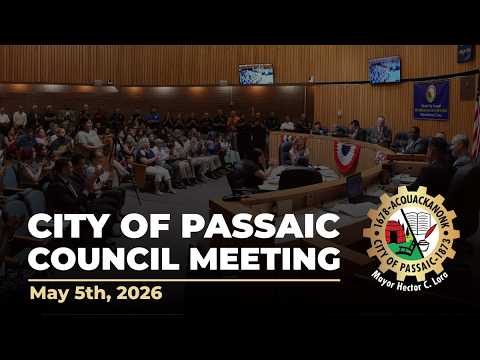
Passaic City Council on May 5 introduced the city’s preliminary 2026 budget, proposing a 5% municipal tax levy that administration said would raise about $3,995,000 and would produce an average municipal tax bill of $7,737—an increase of $322 a year ($26.83 a month) for a homeowner with an assessed value of $275,000.
Chief Financial Officer Omar Garcia, who led the presentation, framed the plan as a workbook-backed summary of how the city expects to spend $123 million in appropriations and how it would raise that money. “The budget is the outline of how the city intends to spend its funds during the calendar year in order to provide the necessary services for its residents,” Garcia said during the PowerPoint overview.
Administration asked the council and public to focus on a handful of line items that drove most of the increase. The budget lists health‑benefit costs rising by $6,534,800, liability insurance up by $960,000, and solid‑waste and recycling contract increases of $334,000. Garcia also noted a state‑mandated library appropriation increase of $216,341 and said many increases reflect external contract or state decisions.
Mayor [title shown in the transcript as “Mayor”] emphasized fiscal limits and defended a 5% levy ceiling while noting the pressure health‑plan increases impose on the municipal budget. “The acceptable level is the commitment I made when I first ran to never go beyond 5% under any circumstances,” the mayor said.
Administration said revenue changes include an estimated $400,000 gain in municipal court receipts and about $475,000 from new payments‑in‑lieu‑of‑taxes (PILOTs); deferred state aid is falling by roughly $275,000. Officials explained the budget remains balanced under New Jersey rules by matching $123 million in appropriations with $123 million in estimated revenue, including $13.4 million in anticipated surplus and $83,895,000 to be raised by current‑year taxes.
Council members pressed staff on the budget details during a lengthy question‑and‑answer session. Councilors asked about bond rates, how much surplus was being used and can be regenerated, whether vacancies could be held open, and how cutting choices would affect service levels. The administration said some operational changes are possible—such as delayed vehicle replacements, hiring freezes, stricter overtime controls and increased mutual‑aid reliance for public‑safety calls—but that the goal is residents should not “feel” a change in day‑to‑day services.
Because the health‑benefit increase is such a large driver, the administration described an active negotiation to offer a high‑deductible plan coupled with a health savings account (HSA) and a health reimbursement arrangement (HRA). Staff estimated such a design could reduce the city’s health‑benefit cost by approximately $2 million if adopted and if active employees moved onto the plan. The council subsequently approved a resolution (Resolution 30) authorizing creation and funding of HSAs and HRAs and briefly entered closed session to discuss negotiation‑sensitive details before voting in favor of the resolution by roll call.
The council introduced the budget and set a public hearing for June 4, at which point the body may amend and then vote to adopt the budget. The administration will forward the introduced budget to the state Division of Local Government Services for review. The council’s review and the scheduled public hearing are the next opportunities for further changes to the proposal.
What happens next: The city will hold a public hearing on the introduced budget at its June 4 meeting. The council may amend the budget before adoption and the state may offer technical comments after its review.