Get Full Government Meeting Transcripts, Videos, & Alerts Forever!
Get email alerts on the Wastewater Permitting topic
No spam. Unsubscribe anytime.
Taylor County commissioners vote to oppose proposed Foley Cellulose wastewater relocation
Summary
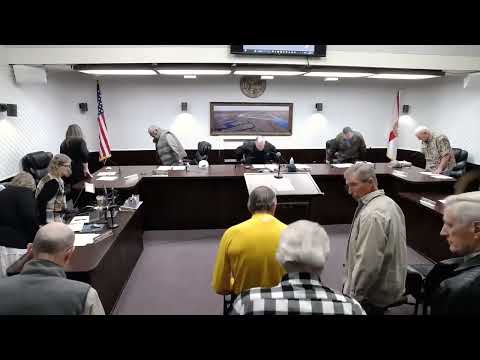
After a public hearing on Dec. 11, 2025, the Taylor County Board of County Commissioners voted to prepare a resolution and send a letter to the Florida Department of Environmental Protection opposing Foley Cellulose LLC's plan to move a river discharge point upstream, following resident testimony on health, remediation and economic impacts.
The Taylor County Board of County Commissioners voted on Dec. 11, 2025, to prepare a resolution opposing Foley Cellulose LLC's proposal to relocate its wastewater point of discharge from the D002 pipeline near PetersonLanding to a former upstream point identified as D001 on the Fen Holloway River, and to send a formal letter of opposition to the Florida Department of Environmental Protection (DEP). The action followed a public hearing and a presentation on DEP's anti-degradation criteria.
Bob Cade, director of the Taylor County Development Authority, told the commission the authority had unanimously recommended opposing the move. "Our recommendation is to oppose the proposed relocation of the Foley Cellulose wastewater point of discharge," Cade said, citing local economic losses since the mill's closure: a decline of 604 jobs (from 6,937 to 6,335), unemployment rising from 4.4% to 6%, and a $2.9 million drop in ad valorem tax collections. Cade argued those impacts, combined with what he said was an absence of documentation showing all alternatives had been evaluated, meant the relocation had not been shown to meet the public-interest standards in the state's anti-degradation rules (transcript cited as "rule 60 two-four, subpart 4 21 of the Florida Administrative Code").
Before public comment, Chet Thompson, a subcontractor with Due Diligence Associates working under contract through the Adams & Reese law firm, reviewed the DEP process the county should consider. Thompson read the six factors DEP examines for a relocation request — economic and social benefits; public health and safety; environmental benefits; technical and regulatory compliance; community welfare; and an alternatives analysis — and urged speakers to focus their comments on those points. "The focus tonight is on this anti degradation study," Thompson said.
Residents who spoke at the hearing pressed several concerns: potential groundwater contamination tied to the mill site, the need for independent remediation plans and monitoring, and the environmental and economic value of the river to local tourism and recreation. Gary Chasen, a long-time mill worker and resident, said he worries that ceasing operation of the site's No. 2 well removed a control that had prevented contaminated groundwater from migrating. "If there's anything on the site that would cause inadvertent seepage or something that would get in the groundwater, the last place we'd catch it at would be through the number 2 well," Chasen said, and he asked the board to seek a remediation report from DEP or the EPA.
Several speakers suggested alternatives to returning discharge to the river. Andy Jackson, a property owner on the Fen Holloway River, urged considering a land-based spray field on acreage Georgia Pacific has for sale; he said a spray field might enable an industrial park and boost property values. "If they would construct that spray field, now you have an opportunity to really construct an industrial park at that site," Jackson said. He and other commenters argued the pipeline and D002 discharge had played a central role in cleaning the river and that moving the discharge back upstream would reverse progress.
Other residents described past odors and foam and said they had lost confidence in the company; several noted health problems in their families they attribute to past pollution. Speakers repeatedly told the commission that the relocation had not demonstrated public-interest benefits or adequate alternatives analysis under DEP's anti-degradation criteria.
After public comment the board debated next steps. Commissioner (label 7) moved to prepare a resolution opposing the proposed relocation of the Foley Cellulose discharge and to send a letter from the Board of County Commissioners to DEP stating the board's opposition; another commissioner seconded the motion. The chair and several commissioners voiced support for keeping the pipeline in place and urged DEP not to approve a permit to return the discharge upstream. The motions were approved in roll-call votes and the board instructed staff to draft the resolution and the letter to DEP.
The board did not vote on changes to any permit itself; its action was a formal expression of opposition and a commitment to submit a written comment and resolution to the state agency. The meeting then moved to general business and was adjourned.
Next steps: the county will draft the resolution and transmit the board's letter to the Florida Department of Environmental Protection; no final DEP decision was recorded at the meeting.