Get Full Government Meeting Transcripts, Videos, & Alerts Forever!
Get email alerts on the Traffic Safety topic
No spam. Unsubscribe anytime.
Vendor says school‑zone cameras cut violations; board questions revenue split, statute limits and due process
Summary
A vendor for photo‑enforcement presented speed‑study results showing hundreds of violations at school zones and proposed a violator‑funded camera program; commissioners questioned legal limits (enforcement only during beaconed school‑zone hours), fine amounts, revenue allocations and vendor quality-control and asked for ordinance language and more detail before moving forward.
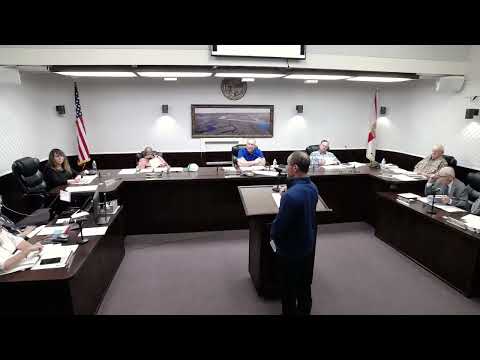
A private vendor proposing automated school‑zone speed enforcement told Taylor County commissioners on Feb. 17 that their three‑day speed study found large numbers of violations at Taylor County Primary and other sites and that similar programs elsewhere have produced steep reductions in violations.
Jeff Iannuzzi of Nova Global (speaker 14) presented study numbers and said the company’s systems only issue photo violations for speeds at least 11 mph over the posted limit during beaconed school‑zone times, and that enforcement is limited to when beacons are active by state statute. He said citations are processed against the registered vehicle owner and that the service is violator‑funded — the vendor covers implementation, mailings and back‑office work and can either collect and transfer funds or allow the county/sheriff to collect. "This is all violator supported," he said.
Board members raised questions about the statutory limit on times and locations that can be enforced, the distribution of revenue, the vendor’s handling of disputes and appeals, and the public‑awareness and warning period the vendor recommended. Commissioners asked for example ordinance language, clarification of the revenue split and confirmation that any revenue would be earmarked for public‑safety uses as required by state law.
Several commissioners expressed caution about public perception and asked staff to provide ordinance drafts, revenue‑allocation proposals and an implementation plan (including a defined warning period and public outreach) before any board decision. No vote to adopt an ordinance or to contract with a vendor occurred at the meeting.