Get Full Government Meeting Transcripts, Videos, & Alerts Forever!
Get email alerts on the Land Use topic
No spam. Unsubscribe anytime.
County hears two land‑use disputes: property access case and beachfront food‑service controversy; commission tables settlement requests
Summary
Property owner and counsel urged the board to record vested rights and settle pre‑litigation claims over a 60‑foot road‑frontage requirement. Separately, a beachfront food‑service project faces stop‑work orders, a denied variance and a conditional settlement proposal. Commissioners tabled settlement action pending written proposals and technical review.
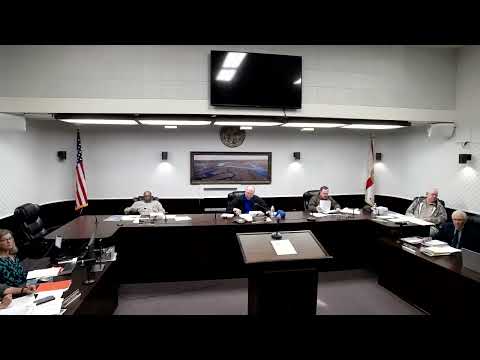
Two lengthy land‑use disputes — one about access to a Webb Lane parcel and another about a beachfront food‑service accessory structure — dominated public requests at Taylor County’s March 17 meeting.
Jim Stapleton told the board he had been unable to secure a building permit for a parcel he bought in 2021 despite neighboring properties having been permitted. Attorney Ray Curtis, speaking for the owner’s interests, argued the county’s 60‑foot road‑frontage requirement (as applied by staff) produces unfair results and that Florida statutory law on access by necessity (statute cited in the meeting as 704.01) and supporting case law could allow an owner to sue to secure practical access. Curtis presented a pre‑litigation settlement proposal: K & L Investments would waive claims in exchange for a recorded notice of vested rights recognizing the parcel’s pre‑2006 configuration, which Curtis said would avoid litigation and monetary exposure for the county.
County staff and the county attorney described the competing obligations they face: staff must enforce existing land‑development regulations and consider public‑safety factors such as emergency vehicle access. Planning staff noted parts of the frontage requirement date to earlier land‑development regulations and that the 2006 ordinance clarified flag‑lot provisions; staff said the county should consider code cleanup but cautioned against ad‑hoc waivers that would undermine consistent development review.
A second dispute grew out of a beachfront accessory‑building and food‑service project by Luis Bautista (Pancho’s). The project’s timeline included a purchase of a lakefront lot, electrical and accessory‑building permits, and an ACOP alcohol transfer. County staff issued stop‑work orders citing code and safety concerns and later the planning board denied a setback variance. Curtis argued that the denial and subsequent planning‑board materials included late evidence and ex‑parte contacts that tainted the quasi‑judicial process and proposed a settlement similar to the Stapleton offer: a conditional variance tied to engineering upgrades, hardened ground‑level ADA restrooms, and professional‑engineer certification that would allow the business to proceed without further litigation.
Commission discussion emphasized the technical complexity — whether FEMA or ASC‑24 approvals are required for below‑base‑flood bathrooms, the engineering significance of post sizes and risk categories, and the limits of county authority when state preemption (food‑truck statute) applies. Several commissioners and the county attorney recommended the board not act on oral proposals in open session and instead asked counsel to present a written settlement agreement, circulated in advance, and for staff to confirm technical requirements such as FEMA variances.
Outcome and next steps: the board received a motion and second on a settlement concept during the meeting but ultimately tabled final action and asked the applicant’s counsel to submit a written proposal and supporting engineering documentation. Staff was directed to identify outstanding technical issues (FEMA, ASC‑24, development plan status) so the board can review a complete package before any vote.
Why this matters: the cases touch on how land‑use policy and code enforcement interact with property rights and federal/state statutes on access and mobile food vendors. A unilateral or ad‑hoc fix could set a precedent affecting multiple parcels; a negotiated settlement could reduce litigation risk but requires clear terms and technical assurances.
Representative quotes: • Ray Curtis, representing the property owner: "You can't pass a law that then choke[s] off somebody's ability to do something that wasn't illegal when they bought it…that's government take." • County planning staff: "Our rules probably need to reflect some means of addressing a situation where you do not have legal access…But when you have intentional development and division of property that is not compliant with the rules in place at that time, it's not eligible for a permit."
The board requested a written settlement proposal, directed staff to identify outstanding legal/technical issues, and tabled decision on the settlement(s) to a future meeting.