Get Full Government Meeting Transcripts, Videos, & Alerts Forever!
Get email alerts on the Data Centers topic
No spam. Unsubscribe anytime.
Residents urge moratorium on data centers at Cumberland County hearing; PWC and commissioners call for careful review
Summary
About two dozen residents and local stakeholders urged the Cumberland County Board of Commissioners to impose a moratorium on new data center approvals, citing water, power and contamination concerns; Fayetteville PWC said safeguards exist and commissioners asked staff for more study and town‑hall engagement.
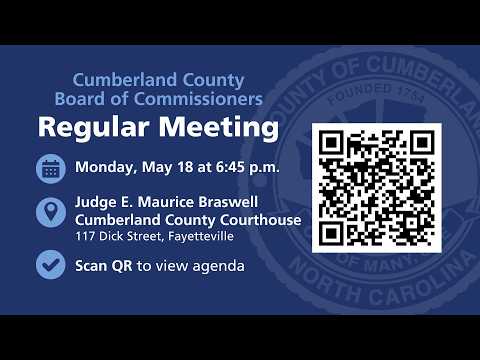
At a packed May 18 Cumberland County Board of Commissioners meeting, roughly two dozen residents, business owners and advocates spoke during a public hearing asking the board to pause approvals for new data centers while the county studies environmental, infrastructure and economic impacts.
The hearing opened after county staff explained a draft ordinance to implement a moratorium on issuance of development permits for data centers and related facilities. Chair (role label) confirmed 24 registered public speakers and read public‑hearing procedures, including time limits for proponents and opponents.
Speakers described a range of concerns. Joseph Schwab, using a tower‑block illustration, urged a moratorium of at least one year and recommended tight definitions of “data center,” special permitting, and requirements on water withdrawals, generator use and siting. Several residents said they feared additional strain on local water supplies already affected by PFAS contamination and drought; some asked for independent health and environmental studies and binding community benefits agreements.
“Communities deserve transparency before decisions this large are made,” said one resident presenting on the county’s lack of a permanent public water supply while noting GenX/PFAS concerns. Multiple speakers cited recent national examples — large projects in Texas, Utah and Georgia — as reasons to pause and require stronger local protections.
Fayetteville PWC’s representative, Timothy Bryant, told commissioners that PWC has safeguards and tariffs aimed at ensuring large industrial users pay for needed infrastructure and that new customers provide letters of credit or other financial security to cover system upgrades. He said PWC requires large service customers to fund infrastructure improvements and that many modern data centers use closed‑loop cooling that minimizes potable water use.
Data center developer Eric Little told the board that technology has advanced and that some projects use immersion cooling that greatly reduces water use; he urged the board to consider negotiated conditions rather than a blanket ban.
After public comment closed, commissioners asked staff and the county attorney whether a moratorium would halt projects already underway; staff said a moratorium would not stop projects with permits already issued but would apply prospectively from the moratorium’s effective date. Commissioners discussed intergovernmental coordination with the City of Fayetteville, additional town halls to gather public input, and working with utility providers and the joint planning commission to develop defensible ordinance language.
Commissioner Tyson thanked residents for their testimony and said the county must be meticulous because of the community’s history with industrial contamination. Vice Chairman Sherman Jones encouraged town halls in several parts of the county to ensure both listening and two‑way technical Q&A. Several commissioners urged staff to return with clarifying language, and the board indicated it would digest the public input and determine next steps at a future meeting.
No formal vote on the moratorium ordinance was taken at the May 18 meeting; the public record and district staff comments will be considered at follow‑up meetings and coordination with municipal partners. The county manager and staff were directed to continue working with legal counsel and municipal officials and to keep the public informed about next steps.