Get Full Government Meeting Transcripts, Videos, & Alerts Forever!
Get email alerts on the Transportation topic
No spam. Unsubscribe anytime.
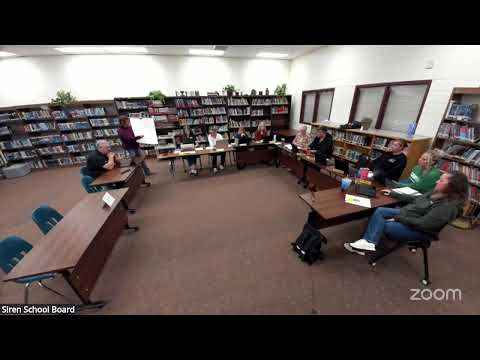
School board questions bus contract and transportation costs as enrollment falls
Summary
Board members pressed a presenter on whether the district's flat-rate bus contract can be adjusted as student numbers fall, asking for route counts and cost comparisons and raising the possibility of service reductions or a four-day week to save money.
The Siren School District board discussed its bus contract and rising transportation costs after members noted falling enrollment and asked whether the district could lower costs by reducing routes or renegotiating the contract.
At the start of new business the Chair asked whether the current contract is based on routes or on the number of students. A committee member said the district has 'dropped over a 100 students' and asked whether the contractor would be willing to renegotiate before the contract ends in 2028. The presenter, who has handled billing and route planning, said the district has used a flat five-year rate and that 'Mileage is huge.'
Why it matters: transportation is a major line-item in the district budget, and board members said savings there could materially affect the district's fiscal picture. One member said cutting a route might increase some students' ride times by '10 or 15 minutes' but added, 'if it's a significant savings, might be worth it to the district and to the taxpayers.'
Board members pressed for operational details: how many students typically ride each route, which buses tend to be full and which are underloaded, and whether fuel surcharges are calculated locally. The presenter said fuel is priced locally and referenced a $1,000 monthly fuel-related charge in the current bill (transcribed as 'the 1 $1,000 fee for, you know, for the month'). Members asked staff to provide a current rider count by route and to estimate the cost implications of reducing routes or moving to a four-day week.
The board also discussed unrelated but potentially relevant options such as class- or grade-sharing with nearby schools to reduce midday routes, and asked staff to return with contract scenarios, per-route ridership numbers and a summary of fixed versus mileage-based costs.
Next step: staff will collect ridership counts and ask the contractor to run scenarios for a reduced-route model or other contract adjustments; the board agreed to revisit the issue at a future meeting.