Get Full Government Meeting Transcripts, Videos, & Alerts Forever!
Get email alerts on the Public Safety topic
No spam. Unsubscribe anytime.
Bridgeport council hears DCED fire‑service study proposing single‑station model, tax incentives to recruit volunteers
Summary
DCED peer consultant Scott Little presented a fire‑service study to the Bridgeport Borough Council recommending consolidation from two stations into one, a municipally appointed fire chief and a training officer, and short‑, mid‑ and long‑term steps to address volunteer recruitment, equipment costs and station facilities.
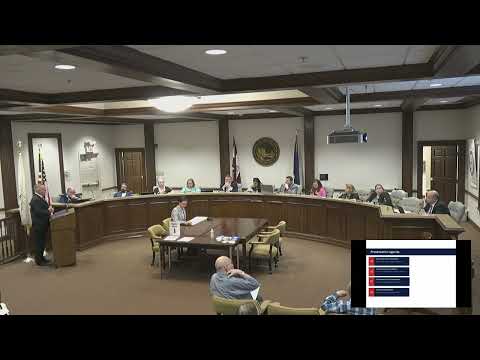
Bridgeport Borough Council opened its March 12 meeting with a work session in which the Pennsylvania Department of Community and Economic Development (DCED) presented a 2026 fire‑service study recommending structural changes and targeted recruitment efforts for the borough’s volunteer fire companies.
The study, presented by DCED local government specialist Anne Morrow and peer consultant Scott Little, highlighted Bridgeport’s ISO Class 3 public protection classification and said that while the borough benefits from strong mutual‑aid relationships it faces persistent volunteer recruitment and equipment challenges. “You have a huge dedicated amount of volunteers…we roster 42 volunteers currently,” Scott Little said, noting the limits of volunteer availability for around‑the‑clock coverage.
Why it matters: Council members and fire leadership said the recommendations affect resident safety, insurance premiums and the borough budget. Little stressed the long procurement lead times and high prices for major apparatus — “the ladder truck, for example, is well over $2,000,000” and may take four to five years from order to delivery — making advance planning essential. The study’s strategic recommendations include: consolidating two stations into a single station to improve operational efficiencies; adopting recruitment and retention measures (including marketing and outreach and possible tax credit incentives); developing a long‑range equipment replacement plan; exploring refurbishment as a stopgap option; and creating municipal operational authority, including an appointed borough fire chief and a short‑term borough training officer.
Council members asked whether a single‑station model would preserve current response times. A council member who raised that concern noted Bridgeport’s relatively small size and asked whether a central location could meet national benchmarks; Little replied the analysis considers neighboring municipalities and mutual‑aid partners when modeling total response package time and location choices, but said specific sites would require further feasibility work.
DCED’s process and next steps: Anne Morrow described the DCED technical‑assistance pathway for follow‑up work: the borough manager (or designee) may submit an electronic request on the DCED local government website to scope any additional technical assistance or feasibility study. Morrow said the service is provided at no cost, though the program was temporarily paused until June while DCED reorganizes that assistance process.
Fire‑department reaction and short‑term actions: Chief Wanzik (spoke at the meeting) and fire leadership said the membership broadly supports moving forward and intends to begin implementation steps quickly. Borough leadership proposed three immediate actions: (1) enhance borough code language to formally recognize a unified Bridgeport Fire Department and memorialize the council’s authority to appoint a fire chief; (2) enact a property‑tax rebate program for eligible Bridgeport Fire Department (BFD) members; and (3) ramp up outreach and recruitment. Chief Wanzik said the department is “on board” with moving forward and expected committee discussion the following Thursday to begin sequencing next steps.
What was not decided: Council did not adopt any ordinance or formal resolution during the work session; no binding vote on consolidation, tax incentives or station siting occurred. Several recommendations require further feasibility work, funding decisions and formal council action at future public meetings.
Context and local impact: The study ties to residents’ insurance costs (the ISO rating affects premiums), borough capital planning (multi‑million‑dollar apparatus purchases), and recruitment policy options. Council members requested state grant and recruitment resources from the state fire commissioner’s office and DCED, which staff said they would provide.
What’s next: Fire leadership will meet with borough staff and council members to prioritize short‑ and mid‑term goals; the police and fire committee plans a follow‑up meeting Thursday at 6:30 p.m. and any contract or scope of work with DCED would return to a public meeting for council approval.