Get Full Government Meeting Transcripts, Videos, & Alerts Forever!
Get email alerts on the Pace Financing topic
No spam. Unsubscribe anytime.
Texas PACE Authority outlines voluntary property-assessed financing to Gregg County
Summary
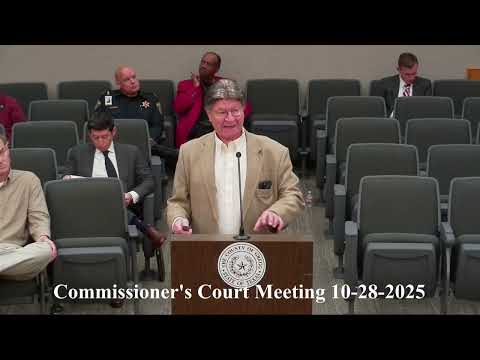
At the Oct. 28 Gregg County Commissioners Court meeting, Texas PACE Authority program director Steven Manek described a voluntary, property-based financing option for commercial and institutional energy and water projects, saying adoption would impose no cost or liability on the county; the court took no action and asked county counsel to review statutory language.
Steven Manek, program director for the Texas PACE Authority, told Gregg County commissioners on Oct. 28 that the program offers a voluntary financing mechanism for commercial, industrial and institutional property owners to pay for energy-efficiency, water-conservation and on-site power projects through an assessment that runs with the property.
"PACE actually puts an assessment on the property voluntarily by the owner," Manek said. "That assessment is gonna run with the property even if you sell the property." He said projects must be shown by a licensed engineer to pay for themselves before a PACE loan is qualified.
Manek described the program as a coordination among local government, private lenders and property owners and said it does not apply to government-owned buildings. He told the court the administrator handles contracts and filings and that, in his view, "there is no financial exposure" to the county: "The county never has to touch the money." He also urged county attorneys to review the statute.
Why it matters: PACE provides an incentive structure for private property owners to finance upgrades using expected utility savings, and proponents say it can increase local tax bases and economic activity without spending county general funds. Opponents in other jurisdictions have raised questions about lender disclosures, mortgage interactions and local administrative roles; Gregg County’s court did not vote to adopt the program at this meeting.
Details and scope: Manek said PACE can cover multifamily properties of five units or greater and finance measures with terms up to the weighted average useful life of installed equipment (he cited examples of 15–25 years). He gave statewide context, saying the program has been operating since shortly after statutes were enacted and cited cumulative capital investment figures (stated as about $541,000,000 in his presentation) and broad geographical coverage in Texas.
County action and next steps: Judge Stout indicated the presentation was for educational purposes and that there was no action item. Commissioners asked about project evaluation, administrative duties and liability; Manek said the program provides a report for the county website, a resolution-adoption workflow and a subsequent contract if the county chooses to adopt. He repeatedly recommended that county legal counsel review the statute that governs PACE before formal adoption.
What to watch: If Gregg County moves to a resolution of intent and schedules a public hearing, the court will create a formal adoption record and afterward would review any proposed contract with the Texas PACE Authority. At this meeting, the court did not adopt the program.
Quote: "This is a voluntary free market private property rights program," Manek told the court.