Get Full Government Meeting Transcripts, Videos, & Alerts Forever!
Get email alerts on the Budget topic
No spam. Unsubscribe anytime.
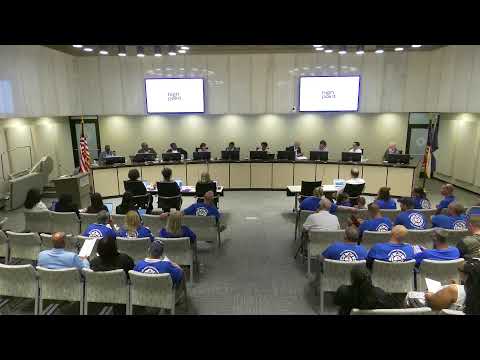
Residents and firefighters urge High Point council to fund separation allowance for firefighters during budget hearing
Summary
At a May public hearing on the proposed FY2026–27 budget, residents and the firefighters' union urged the City Council to fund a locally managed special separation allowance to bring firefighter retirement benefits to parity with police; council will take the budget up for a vote in two weeks.
Mayor Cyril Jefferson opened a public hearing on the proposed FY2026–27 budget and heard roughly a dozen speakers representing residents, party activists and the firefighters’ union pressing the council to fund a locally managed special separation allowance for High Point firefighters.
The request for parity was framed around recruitment, retention and occupational health risks. Colleen Allen, regional chair of the High Point Democrats and a High Point resident, told the council she was there "to support extending the special separation allowance for our firefighters, so that they could be on equal footing with our city law enforcement officers who already receive it." Allen said firefighters face "life threatening situations daily" and asked the council to "honor a promise."
Becky Providenti, a precinct chair, said parity helps recruitment and retention and that some workers choose law enforcement over firefighting when benefits differ. "Our community is safer when we can attract and keep the most experienced people in both roles," Providenti said.
Chris Klutz, vice president of the High Point Professional Firefighters Association, pressed the council on health concerns and scientific findings linking firefighting exposures to elevated cancer risks. "This is not a request of something new. It is a request for equal treatment for the people who carry equal risk," Klutz said, summarizing the union’s case and citing peer-reviewed studies and a recent federal change expanding presumptive cancers for federal employees.
Several speakers gave numerical claims about costs and timing: Ella Hendry said the average firefighter retires at about 52 and faces lifetime healthcare costs she estimated at roughly $315,000; resident Ken Ormes said he reviewed the proposed 318‑page budget and told council "total budget has increased by $55,600,000 in the last 5 years" and criticized long-term subsidies to the theater. Those figures were offered as part of public testimony and were not presented as council-certified budget totals.
Mayor Jefferson stressed that the council would not vote on the budget this evening and that the formal vote on the FY2026–27 budget is scheduled for the council’s meeting in two weeks. Several speakers urged quicker action; others raised broader concerns about taxes, capital projects and transparency.
The public hearing closed after the scheduled speakers and the council recorded that community comments were noted; council members will continue to receive feedback before the budget vote.