Get Full Government Meeting Transcripts, Videos, & Alerts Forever!
Get email alerts on the City Budget topic
No spam. Unsubscribe anytime.
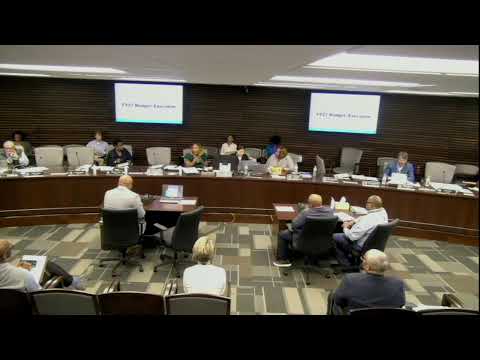
Memphis presents balanced FY27 budget that includes $20 million for paving and expanded asset plans
Summary
City officials presented a nearly $898 million balanced FY27 budget focused on four mayoral priorities and targeted capital investments, including $20 million for asphalt paving and a plan to expand asphalt production to lower costs. Officials warned revenues remain flat.
Walter Person, the city’s chief financial officer, told the council the administration has produced a balanced FY27 budget after a yearlong review that trimmed more than $150 million in potential actions and reset spending to sustainable levels. "We came out of this process with a nearly $898,000,000 budget, almost $900,000,000 dollars But it's a balanced budget," Person said.
Why it matters: The administration framed the operating and capital plans around four priorities laid out in the mayor’s address—thriving neighborhoods; public safety and blight; housing and workforce/youth development; and culture as an economic driver. With limited revenue growth and the end of one-time federal funds, officials said the budget relies on efficiencies and targeted reinvestment rather than a tax increase.
Key figures and program highlights: Person said revenues are effectively flat (about 1% growth) and emphasized structural pressures such as pension and health-care costs. On the capital side, the presentation noted more than $1 billion projected in the FY27–FY31 CIP. Among specific allocations, city engineering lines include a $150,000 seed for the Highway Safety Improvement Program and $400,000 for the Percent-for-Art program. For street paving, the presentation listed roughly $6.75 million in two "streets group" lines (about $20,000,000 combined) as dedicated asphalt paving funding for FY27; the administration also proposed rehabilitating the city asphalt plant to produce more asphalt at a lower price and increase paving throughput.
Council reaction and next steps: Several council members pressed the administration for specifics on how paving locations will be chosen and whether money will be distributed equitably across districts. A council member urged follow-up reporting on whether speed humps are temporary or permanent and who is responsible for maintenance; CFO Person and engineering staff answered that engineering handles maintenance and noted some earlier temporary installations were not long-lived. Council members were told to submit more detailed questions to the budget analyst ahead of the next hearing; staff also committed to providing additional documentation on asphalt plant plans and paving schedules.
The committee recessed after asking departments to return with requested follow-ups at the next budget hearing.