Get Full Government Meeting Transcripts, Videos, & Alerts Forever!
Get email alerts on the Accountability Model topic
No spam. Unsubscribe anytime.
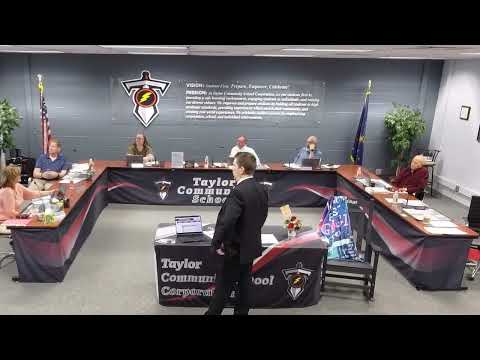
Taylor staff outline new school accountability model, flag data and attendance challenges
Summary
School staff explained a newly approved accountability model that adds student-growth measures, career-readiness 'seals' and attendance thresholds (94% work‑ethic indicator) to letter grades; staff warned state data pulls may be inaccurate and said the 2526 school year will serve as the baseline.
Steve, a staff member, told the Taylor Community School Corp that the newly approved accountability model will use the 2526 school year as its baseline and adds growth and career-readiness measures to traditional test-based scores.
The model replaces a nearly test-only formula and combines academic mastery (reading, math, science, social studies), student growth checkpoints, attendance and career/postsecondary 'seals' so schools can earn points beyond raw test performance. "This year, the 2526 school year will be our baseline year for this new model," Steve said when introducing the changes.
Why it matters: board members said the new approach rewards measurable growth and career preparation but noted it could disadvantage schools with low attendance or limited access to work-based opportunities. Steve described how K–3 students will be evaluated primarily on early assessments (iLearn/iRead) and attendance, middle grades can add points by completing high-school courses, and ninth grade will be judged on being "on track" with 10 or more credits. For grades 11–12, seals and diploma indicators make up much of the score; the SAT and graduation rate supply the remaining points.
Key details cited in the meeting included a 94% attendance threshold for the "work ethic" indicator and a requirement that an employment-related honors-plus seal include roughly 650 hours of documented work-based learning over multiple years. Board members asked whether summer hours could count and whether paid or volunteer placements would qualify; staff said both could count but that supervising employers must document higher‑skill learning (for example, managerial tasks) rather than routine duties.
Board members also pressed for clarity about how student growth will be calculated from checkpoints. Steve said the state has described three checkpoints that provide beginning and end-of-year measures but has not published exact growth formulas. "We assume they're gonna take it from these checkpoints," he said, adding that the district will create spreadsheets to track indicators internally so staff can anticipate how the state will calculate school scores.
Separately, staff raised concerns about data quality: "I looked at the GPS dashboard today. It is so off," Steve said, warning that inaccurate state dashboard values could affect school ratings if the state pulls data from those sources. The board asked staff to track metrics carefully and prepare parent- and community-facing explanations if the district's scores shift once the baseline is applied.
Next steps: staff said they will build internal tracking spreadsheets, review documentation requirements for work-based learning, and continue refining plans to place students in qualifying experiences. No formal votes or policy adoptions were taken at this meeting.