Get Full Government Meeting Transcripts, Videos, & Alerts Forever!
Get email alerts on the Waste Management topic
No spam. Unsubscribe anytime.
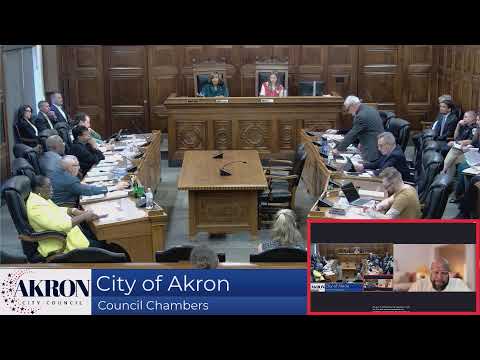
Akron council approves 25-year Waste Management agreement to close Fountain Street transfer station
Summary
After months of debate and public testimony, Akron City Council approved a 25-year development, community benefits and service agreement with Waste Management of Ohio to close the Fountain Street transfer station and build a new facility; the measure passed 12–1 amid calls for stronger oversight and community protections.
Akron City Council voted to authorize a 25-year development, community benefits and service agreement with Waste Management of Ohio that links the closure of the Fountain Street transfer station to construction of a new transfer facility on East Archwood and East Akron. The ordinance passed 12–1; Councilman Hannah cast the lone dissenting vote.
The agreement, read into the record as Item 1 under regular business, was the product of months of negotiation and committee review. Councilman Kammer, whose committee reported favorably, asked that the council suspend the rules to consider the ordinance immediately. He said the plan includes development requirements, community benefits, and a services contract tied to the closure of the existing Fountain Street site.
Pastor Mark Tibbs, representing Centenary United Methodist Church and community groups, criticized the financial terms during public comment, saying the draft agreement would create “a 25 year service contract…worth a $131,000,000” while the development agreement proposes only “$1,000,000” in community benefits. Tibbs said the Fountain Street neighborhood had endured environmental harms for decades and urged a stronger, quantified benefits package.
Mayor Malik responded during debate, stressing that the larger contract figure cited in public comment represents the overall amount Waste Management would handle under the services agreement, not company profit. The mayor said linking closure of Fountain Street to construction of a new facility was the city’s principal leverage: “There would be no long term services agreement with WM without closure of the Fountain Street facility and the construction of a new facility,” he said. He also said the new facility would be sited more than “1,000 feet away from any other homes in the area.”
Councilmembers split on the equities of moving the facility within the same ward. Councilman Hannah questioned how the $1,000,000 community benefit figure was calculated and said he opposed placing a new transfer station “in Ward 5,” calling it ‘‘standing up for the residents of Ward 5’’ and announcing he would register a vote of no. Councilwoman Davis said she had taken a “deep dive” into the agreement and, while sympathetic to neighbors’ concerns, would support the ordinance because the alternative risked Waste Management walking away and leaving the city to manage service and costs.
Other council members emphasized oversight and financial accountability if the project moves forward. Councilman Greer said any TIF or financing that accompanies the project should be intentionally used for public improvements in affected neighborhoods and urged a “trust but verify” approach. Several council members and community groups urged clearer complaint mechanisms and codified oversight tied to the community benefits agreement.
The roll-call vote followed brief final remarks and confirmation that the committee’s report was favorable. The ordinance passed 12–1. Councilman Hannah recorded the sole vote against the measure. The legislation directs the mayor or his designee to execute the development, community benefits and services agreement and related documents with Waste Management of Ohio and its affiliates.
Next steps described in the meeting included detailed TIF and financing work once construction is proposed and continued community participation in implementing complaint and oversight mechanisms. Several council members said they expect to closely monitor how TIF and other funds are spent and want robust, codified processes for community oversight.