Get Full Government Meeting Transcripts, Videos, & Alerts Forever!
Get email alerts on the Tax Compliance And State Revenue topic
No spam. Unsubscribe anytime.
Former and current Treasury auditors tell House panel steep decline in out‑of‑state audit staff risks millions in lost revenue
Summary
Two auditors told the Michigan House Oversight Committee that the Department of Treasury’s Tax Compliance Bureau reduced out‑of‑state audit staffing from 28 to eight, adopted metrics that prioritize preliminary determinations, and broadened a 20% pay premium in ways they say increased costs while failing to protect corporate tax revenue.
Two Treasury auditors testified to the Michigan House Committee on Oversight that changes in the Department of Treasury’s Tax Compliance Bureau have sharply reduced the state’s capacity to audit large, out‑of‑state corporations and could cost Michigan millions in lost tax revenue.
Clay Cornelius, who identified himself as a current state assistant administrator with 22 years at Treasury, and Sean Lowry, a former Treasury senior auditor who said he now works for the Internal Revenue Service, told lawmakers the bureau’s out‑of‑state audit team shrank from 28 auditors in 2019 to about eight in 2025. “We’ve got 8 auditors that are trying to protect that 7,100,000,000,” Cornelius said, referring to the annual revenue he said is tied to out‑of‑state taxpayers. Lowry added that the out‑of‑state function historically covered the largest corporate and sales‑use tax payers and that its erosion shifts audit pressure to smaller, in‑state businesses.
The witnesses said leadership changes and a shift toward customer‑service metrics led managers to emphasize faster, preliminary audit determinations rather than final assessments. Lowry told the committee the bureau was "jamming" preliminary audit determinations through to meet quotas and that those numbers are not a reliable measure of final revenue. He said the focus on intermediate metrics produced inflated, short‑term performance indicators while final results and collections declined.
Cornelius and Lowry also addressed a 20% pay premium that they described as having been adjusted in a manner that increased overall personnel costs without restoring the out‑of‑state audit capacity. Cornelius estimated the premium's cost at roughly $4.7 million a year and said Treasury’s letter to the committee overstated any recovery in staffing after the premium’s adoption.
Members of the committee pressed the witnesses on several technical and policy points, including the time lag for large audits to produce revenue (Lowry said large corporate audits commonly take one to two years or longer), how auditors are selected (Cornelius said selection criteria are confidential), and how on‑the‑ground presence affects voluntary compliance. Both witnesses said voluntary compliance is strengthened by having local auditors available to conduct in‑person examinations.
When asked whether they had reported problems internally, Lowry and Cornelius said they had raised concerns to managers, the bureau director and deputy treasurer, human resources, and treasurer leadership; they supplied affidavits and documentation, they told the committee, but said the issues persisted. Lowry named several officials he said were copied on internal emails and actions, including administrator David Nonhoff, former deputy bureau director Catherine Deebien, former deputy state treasurer Glenn White, former HR director Pamela Bennett, current HR director Kelly Frump and Treasurer Rachel Eubanks.
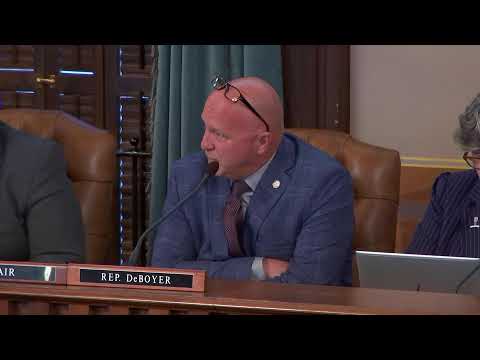
Lawmakers discussed oversight options. Representative Mentzer suggested commissioning an outside audit firm; Chair DeBoer and others pointed to the Office of the Auditor General as a straightforward route for a formal review. Treasury leadership did not testify at the meeting; committee members said Treasury had been invited and that leadership might appear in a later session in June.
The committee did not take formal action at the hearing. Chair DeBoer encouraged the witnesses to provide formal whistleblower documentation so the committee can pursue further investigation.