Get Full Government Meeting Transcripts, Videos, & Alerts Forever!
Get email alerts on the Burden Of Proof topic
No spam. Unsubscribe anytime.
City attorney explains 'preponderance of the evidence' and inspection limits in board workshop
Summary
Daniel Cassus of the City Attorney's Office told the Fresno City Building Standards Appeals Board that the preponderance standard requires a fact be more likely true than not (illustrated as about 51%) and that the city generally bears the initial burden when issuing citations; he also clarified Fourth Amendment limits on inspections.
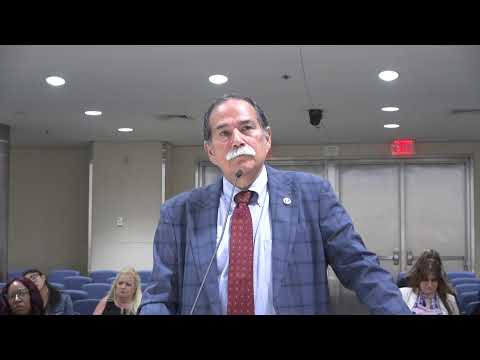
Daniel Cassus of the Fresno City Attorney’s Office presented a workshop to the Building Standards Appeals Board explaining hearing procedures and the preponderance-of-the-evidence standard that governs appeals of building-code and dangerous-building citations.
Cassus told the board that preponderance of the evidence is the lowest standard used in administrative appeals: the decision-maker must find that a claim is more likely true than not (often illustrated as a 51% threshold). He contrasted that standard with higher ones — clear and convincing and beyond a reasonable doubt — and used the scales analogy (a feather tipping the scales) to explain how only a slight weight of evidence can meet the preponderance test.
Why it matters: Board members must apply the correct legal standard when weighing city evidence against an appellant’s defenses. Cassus emphasized that if the city issues a citation it initially bears the burden of proving the violation by a preponderance; if the appellant raises an affirmative defense, the appellant then carries the burden to prove that defense by the same standard.
Cassus also addressed constitutional limits on inspections, saying the Fourth Amendment protects privacy and entry into homes, but evidence visible from a public right-of-way generally does not require property-owner consent. "If you can see it from the street, there's no consent needed," he said, noting that inspectors who view work from a public easement and then check city records are not necessarily invading privacy.
Board members used simple examples — such as trash cans in plain view or a late-appeal showing the appellant was out of town — to test how evidence and defenses work under the preponderance standard. Cassus encouraged thorough recordkeeping by inspectors and staff so the board can weigh permit records, photographs and other evidence.
The workshop closed with thanks from the panel; the meeting then received a brief secretary’s report and adjourned.