Get Full Government Meeting Transcripts, Videos, & Alerts Forever!
Get email alerts on the Budget topic
No spam. Unsubscribe anytime.
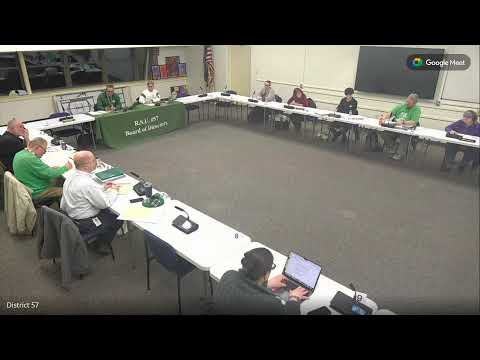
RSU 57 finance committee backs a lean FY27 budget while debating fund balance and capital reserve use
Summary
Administrators proposed a trimmed FY27 budget that cuts about $190,000 from last week’s draft, keeping the district near a 14.7% fund balance; committee members and public commenters debated whether to preserve a $3,000,000 carryforward to capital reserves or maintain a higher undesignated fund balance to guard against health-insurance and enrollment uncertainty.
Administrators presented a revised FY27 budget that trims roughly $190,000 from a prior draft and would leave year‑over‑year expenditures up about 0.34%, producing an estimated cumulative tax increase of roughly 4.34% across the six towns based on the March 17 figures.
Director Walsh, who led the budget presentation, told the committee that "we are at, as you can see, at June '25, we're at the 14.7%" fund balance and reminded members that voters previously approved transferring $1,000,000 to the capital reserve in prior years. He emphasized the timing uncertainty around health insurance, saying the district will not have the final Anthem/MEA trust rates until the last week of March or the first week of April and that administrators had used the best available estimates in preparing the budget.
Public commenters urged caution on cuts and urged continued capital investment. "We had three years of 0% increase in a row. No buses were bought, and staff was laid off quite a few," said Vicky Anderson of Lyman, who credited recent superintendent leadership for catching up on deferred maintenance. Elizabeth Day of Alfred urged the committee to preserve money for tier‑1 capital projects, reminding members that the district had placed $1,000,000 into the capital reserve in recent years.
Committee members and administrators framed the budget two ways. Some called it "bare bones," citing comparative data from nearby districts; one member noted an average peer increase of about $3.5 million and said RSU 57's increase was unusually small. Another member proposed establishing a formal fund‑balance policy to provide a predictable floor — suggesting a 15% target and a possible annual draw (an example figure discussed was 4% of undesignated fund balance) to support capital improvements without eroding the district’s shock absorber.
Administrators described the staffing reductions underpinning the $190,000 decrease as shifts tied to enrollment: "There will be some shuffling of elementary positions," they said, and they expect one FTE reduction overall that can be covered based on current enrollment without elementary layoffs.
The committee polled itself informally on the recommendation; the chair reported that about four of six members indicated support for the numbers presented, while others voiced ongoing reservations and concern about community reaction at the public hearing. The chair reminded listeners of the public budget review session on March 23 and a March 19 meeting with the six towns’ leadership, inviting public participation.
What happens next: administrators will await final insurance rates and continue capital‑planning work, and the committee will consider whether to recommend the current numbers to the full board after public input at the scheduled forums.