Get Full Government Meeting Transcripts, Videos, & Alerts Forever!
Get email alerts on the Language Access topic
No spam. Unsubscribe anytime.
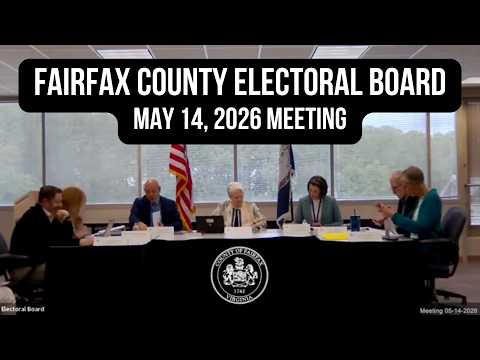
Electoral board approves pilot of multilingual sample‑ballot booklets for November election
Summary
The Fairfax County Electoral Board voted to pilot spiral‑bound sample ballot booklets in selected additional languages for the November general election to improve access while avoiding urgent reprogramming of ExpressVote machines. Final language selections will be determined after state data and county‑attorney review.
The Fairfax County Electoral Board on May 14 approved a pilot to place printed, reviewed sample ballot booklets in selected non‑English languages at precincts and early‑voting locations for the November general election. The board’s motion directs staff to assemble sample ballots in each chosen language, bind them for use at polling places and post signage listing available languages.
The idea is intended to expand language access without reprogramming the county’s ExpressVote voting machines or adding audio translations on the devices. “We would create sample ballot copies in each selected language, assemble them in a spiral‑bound booklet for precinct and early‑voting locations, and allow voters to review and take [the booklet] to the voting booth,” the board member who moved the measure said when introducing the proposal.
Why it matters: staff told the board that some languages are supported only as text on the ExpressVote units and that adding audio for every language would require significant time, specialized translation review and repeated logic/accuracy testing. The general registrar warned that expanding machine‑based translations could roughly double ballot printing costs and extend the L&A testing window for electronic machines from about four days to as many as ten days — a concern because of tight production timeframes before early voting.
The board approved the booklet approach as a November pilot and added a friendly amendment to pause final language selection until staff can review updated federal/census data and seek legal guidance. “We’ll pilot this for the November election and come back with which languages should be included, after we know what the federal and state requirements are,” the chair said during the vote.
What the pilot will do: according to the motion and staff discussion, the pilot will (1) produce sample ballots in each selected language reviewed by professional translators, (2) assemble at least two spiral‑bound booklets per precinct and early‑voting site, (3) allow voters to consult or temporarily take a booklet into the booth and return it upon exit, and (4) post signs at polling places indicating available languages.
Next steps and constraints: board members asked staff to confirm whether the pilot can be implemented for November given the volume of anticipated ballot content (constitutional amendments and bond measures could increase translation load) and to seek county‑attorney guidance about federal requirements for mandated languages. Staff said they will return to the board with proposed languages and implementation details at the next meeting.
The motion carried by voice vote. The board did not fix a final language list at the May 14 meeting; selection will be based on American Community Survey data and any official determinations from state or federal authorities.