Get Full Government Meeting Transcripts, Videos, & Alerts Forever!
Get email alerts on the Building Fees topic
No spam. Unsubscribe anytime.
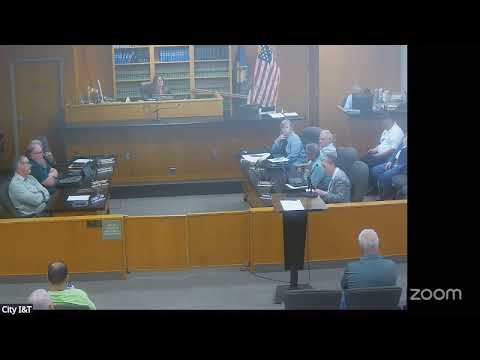
Goshen council advances revised building‑code fees tied to new state law; first reading passes unanimously
Summary
The council voted unanimously to approve Ordinance 5256 on first reading, adopting building‑code fee changes based on a multi‑year cost study and constrained by recent state legislation (HEA 1001) that limits fee increases for five years. Staff will return for second reading in June to meet a July 1 statutory deadline.
The Goshen City Council approved Ordinance 5256 on first reading on May 18, 2026, adopting a revised schedule of building‑code fees developed from a multi‑year study of the building department’s fully burdened hourly rates and overhead.
Attorney Donald Schuler and Building Commissioner Bryce explained the methodology behind the proposed increases: the study calculated fully burdened hourly rates using the salary ordinance plus payroll taxes, benefits and overhead and then estimated time spent by classifications on permit processing, inspections and plan review. The draft ordinance groups fees into four sections—residential, commercial, trade and miscellaneous—and removes building‑code items that are not subject to the new state statutory fund requirements.
A central driver of the timing was House Enrolled Act 1001 (referred to in the meeting as HEA 1001): Schuler said the law requires development‑related fees deposited into a development fees fund and imposes constraints on fee adjustments for a five‑year period after adoption. Specifically, fees adopted after July 1 would be subject to a longer delay before taking effect (180 days vs. a 90‑day period) and could be adjusted only once in the five‑year window; the statute also ties permissible increases to inflation unless the city can show extraordinary cost increases.
Councilors debated whether to adopt the higher fee schedule now (to reduce the immediate shortfall) or delay so an embedded cost‑of‑living increase could be added to take effect January 1; Schuler cautioned that building in an assumed COLA could create a legal challenge if the city’s immediate costs do not support that level. Building Commissioner Bryce described comparative research of other municipalities and said the study aimed to reflect actual processing cost rather than mimic neighboring jurisdictions.
Following discussion, a councilor moved to pass the ordinance on first reading to allow detailed questions to be addressed before second reading in June. The motion passed unanimously. Staff said they will post proposed fee schedules for public review and work with commissioners on any remaining line‑item questions before the June meeting.
Next procedural step: council will consider a second reading in June with the goal of adopting final fee rates before the July 1 statutory effective‑date window.