Get Full Government Meeting Transcripts, Videos, & Alerts Forever!
Get email alerts on the Third Party Funding topic
No spam. Unsubscribe anytime.
Advisory committee tightens rules for third‑party funding, requires hotel documentation and revises scoring
Summary
At a May 14 meeting, a Laredo advisory committee voted to recommend changes to the 2026–27 third‑party funding applications and scoring, including disqualifying incomplete applications (subject to legal review), stronger alignment requirements between needs statements, goals and budgets, and required hotel/overflow documentation for hotel/motel awards.
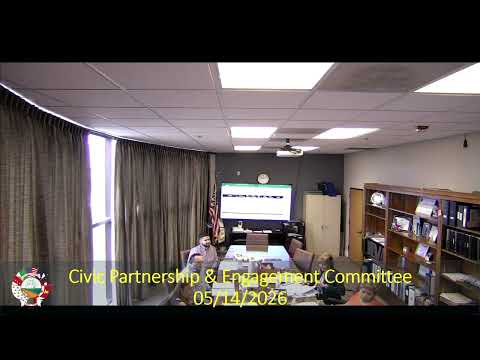
At a May 14, 2026 meeting, members of a Laredo advisory committee that reviews third‑party funding applications voted to approve recommended changes to the general‑fund and hotel/motel application language and scoring. The committee emphasized stricter proof for hotel room nights and clearer rubric guidance so scoring better reflects applicants’ budgets and stated needs.
Why it matters: The committee’s changes, which the group will present to legal and then to city council, affect how local nonprofits and event organizers will qualify for city funds next cycle. Members said the revisions aim to reduce inconsistent scoring and stop organizations with incomplete applications from receiving awards when other applicants meet documentation requirements.
The committee’s discussion centered on three issues: incomplete submissions, how to weight and measure application sections, and proof that hotel/motel applicants actually generate overnight stays. Chair (S1) repeatedly pressed for a firm rule that “any incomplete application will automatically be disqualified for funding,” language members agreed to recommend to legal. Staff (S3) cautioned that the city’s submission system accepts applications before committee review, and the committee therefore adopted a two‑option approach: recommend disqualification if legal clears it, or — if legal declines — retain grading but tighten rubric scoring and documentation requirements.
On scoring, members debated how to allocate points among the needs statement, program goals and objectives, the revenue/expenditure budget and the 9‑90 (990) summary. The committee coalesced around higher weight for the 990/summary and for budget alignment so that funding recommendations better reflect an organization’s financial situation and project plans. As discussed in the meeting, one proposed weighting for the general‑fund application was: summary/990 25 points, revenue/expenditure budget 25 points, program goals and objectives 20 points, and needs statement 15 points; members signaled support for drafting a rubric that ties point ranges to proportional funding recommendations.
For hotel/motel funds, the committee tightened eligibility and proof requirements. Members directed staff to add explicit language requiring applicants to “provide official hotel and overflow‑hotel documentation supporting the reported night stays” or event sign‑in sheets that include guests’ hotel names or a reservation code that maps attendees to a hotel room block. The committee discussed the statutory requirement that eligible projects demonstrably generate overnight visitors ('heads to beds') and agreed that claims of room nights must be supported by hotel confirmation, registration codes or comparable documentation.
The committee made two formal motions during the meeting: one to adopt the recommended changes to the general‑fund application (carried by majority vote after a second) and one to approve the recommended hotel/motel application changes and scoring (also carried by majority vote). The motions passed without a recorded roll‑call tally in the transcript; the Chair announced both motions carried.
What’s next: Committee members asked staff to consult legal counsel about whether the group can disqualify applications after the city’s portal has accepted them. The committee also asked staff to prepare summary reports explaining scores and recommended funding decisions so council members can review justifications when the items move to a budget hearing. The committee will present the recommended changes to city council during the upcoming budget presentation and will incorporate legal guidance before finalizing any disqualification procedure.
Representative quotes from the meeting include Chair (S1): “What it should say, any incomplete application will automatically be disqualified for funding,” and Staff (S3) explaining a process constraint: applications arrive through the city system and once accepted “it’s up to the committee if you wanna grade it or not.” The committee’s recommended changes and the legal questions now move to staff and counsel for review before council action.