Get Full Government Meeting Transcripts, Videos, & Alerts Forever!
Get email alerts on the Privacy Biometric Surveillance topic
No spam. Unsubscribe anytime.
Syracuse Common Council adopts local limits on biometric surveillance
Summary
The Syracuse Common Council voted unanimously to adopt a local measure restricting biometric surveillance after council debate and a finance committee briefing with NICLU; proponents cited risks of misidentification affecting young people, older adults, people of color and LGBTQ residents.
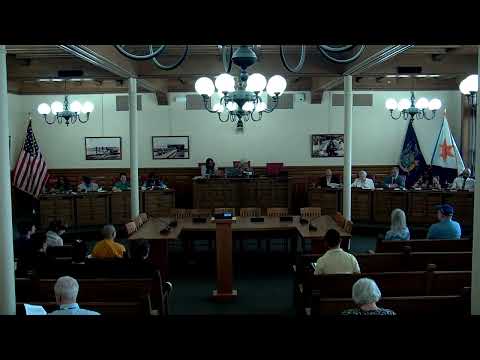
The Syracuse Common Council voted unanimously to adopt a local restriction on biometric surveillance on May 15, 2026, following a finance committee briefing and floor advocacy by Councilor Williams.
Councilor Williams urged adoption as a way for the city to define conditions for biometric technology and to push back against private firms collecting biometric data. "Biometric surveillance can create very tangible harm for our residents," Williams said, arguing that misidentification disproportionately affects "young people, people who are old, persons of color, members of the LGBTQ community." He said the legislation is the culmination of work that began in the winter and credited county partners and NICLU for earlier engagement.
A finance committee report noted a May 14 meeting with Dan Schwartz of NICLU to discuss the local law, which the council considered before the vote. The council called the roll and announced the measure passed unanimously.
The adopted text was presented on the floor as a local-law-style limitation; the transcript refers to the item as "local law A A" and the committee report referenced NICLU's discussion of biometric surveillance. No post-adoption implementation timeline or administrative rules were specified during the meeting.
The council proceeded to other agenda items after the vote. The measure was introduced on the floor by Councilor Williams and moved to immediate adoption; the roll call and outcome were recorded by the clerk.