Get Full Government Meeting Transcripts, Videos, & Alerts Forever!
Get email alerts on the County Budget topic
No spam. Unsubscribe anytime.
Residents and educators press Haywood County commissioners to add school funding during budget hearing
Summary
At a May 18 public hearing on the proposed FY2026–27 budget, County Manager Brian Morehead outlined a roughly $122.5 million plan that uses fund balance and a proposed 7¢ per $100,000 tax assumption; dozens of residents and educators urged the board to close a roughly $3 million school funding gap while some commissioners said the county must also fund an already‑contracted jail expansion.
Haywood County’s Board of Commissioners heard more than a dozen speakers at a public hearing May 18 as the county weighed adoption of its FY2026–27 budget, with many residents and educators urging commissioners to increase local support for schools rather than prioritize the costs of a recently built detention facility.
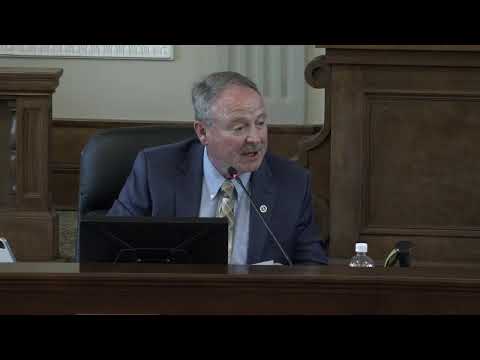
County Manager Brian Morehead opened the hearing with a line‑by‑line review of the recommended budget, which he said two weeks earlier stood at about $121,500,000 and that subsequent adjustments and appropriation changes now put general‑fund totals nearer to $122.5 million. Morehead said the presentation assumed a tax‑rate change equivalent to 7¢ per $100,000 of assessed value and noted the county used roughly $10.9 million of fund balance in the current fiscal year to balance expenditures. He described property tax as the county’s largest revenue source (about $64 million) and cautioned that sales‑tax receipts have lately softened compared with the prior year.
“The recommended budget that I presented two weeks ago is a $121,500,000 (plan),” Morehead said, noting the updated appropriation included roughly $1,021,000 more for the school system.
Public commenters—many of them classroom teachers, school leaders and parents—pressed the board to make a larger, immediate contribution toward the $3,000,000 increase Haywood County Schools requested. Speakers said cuts to staff and programs would harm students and the county’s long‑term economy; several framed the choice as one between investing in children or expanding incarceration capacity.
“We are getting fancy new jail expansion with more than double the current number of beds… But meanwhile, our schools might have to cut 14 teaching positions,” said Chelsea White Hoagland, introduced as a social worker and parent. “By funding cages instead of classrooms, you are laying down a self‑fulfilling prophecy.”
Trevor Putnam, representing school leadership concerns, told commissioners the county’s funding formula tracks student counts and does not keep pace with inflation or rising costs for utilities and payroll. Chuck Francis, chairman of the Haywood County Schools Board of Education, said the school board had been told it would receive additional funding but not the full $3,000,000 it requested.
Commissioners responded in a lengthy discussion about trade‑offs, financing and process. Several members said the county is legally and financially committed to the jail project after multi‑year planning, contracts and construction financing, which makes abandoning or reversing the project difficult. Commissioners also described work to find roughly $1,000,000 more from fund balance and other adjustments to increase the county’s contribution to schools, while acknowledging that would leave a remaining shortfall (commissioners discussed figures of about $700,000 short of the $3,000,000 request unless additional state funds or local adjustments are identified).
“One of the things that strikes me… this board, this county manager, we have held back the tide for seven years,” Commissioner Long said in defense of constrained tax hikes and the timing of the jail financing. “We secured an architect. We secured a constructor. We made the vote to build the jail. That was the final vote, but we had aligned all this stuff up and this was several years ago.”
Other residents asked commissioners to weigh the impact of any tax increase on elderly and low‑income homeowners. A resident who self‑identified as Susie Harris said rising property taxes could force vulnerable neighbors from their homes.
Morehead and several commissioners also fielded technical questions: FEMA reimbursements (he said FEMA owes the county about $5.7 million, with roughly $3.5 million unreimbursed cash after adjustments), lines on sales‑tax allocations for schools and the community college, and drivers of rising personnel costs including a 3% COLA, merit pay and midyear market adjustments.
The board did not take a final vote on the overall budget at the May 18 meeting; Morehead said the next step would be consideration of a budget ordinance on the board’s June 1 agenda and that budget documents were available for public inspection at county offices, the Canton Library and the county website.
In related business during the same meeting the board approved a six‑item consent agenda by voice vote and later adjourned.
What’s next: The board may consider adopting the budget ordinance at its June 1 meeting; commissioners said they expect to continue work over the coming weeks to narrow the remaining school‑funding gap and to monitor state legislative action that could affect local costs.