Get Full Government Meeting Transcripts, Videos, & Alerts Forever!
Get email alerts on the Enforcement And Dog Waste topic
No spam. Unsubscribe anytime.
DSNY pushes Albany for automated enforcement; Council weighs stickers and dog‑waste bills
Summary
At a New York City Council sanitation committee hearing, DSNY urged state approval for automated enforcement of alternate‑side parking to protect street‑sweeper crews and reduce blocking; members pressed DSNY on a proposal to restore alternate‑side warning stickers and several dog‑waste measures amid concerns about resources and 311 complaint volumes.
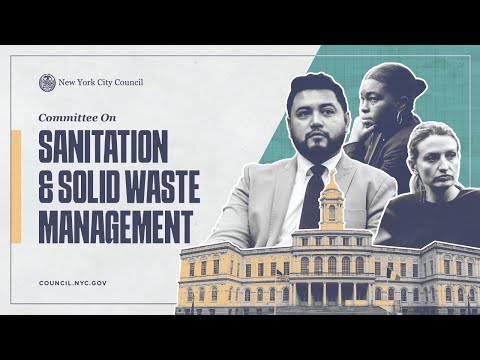
Chair Justin Sanchez convened the Committee on Sanitation and Solid Waste Management to review eight bills and hear Department of Sanitation testimony on street cleanliness and enforcement. DSNY Commissioner Gregory Anderson said the department has asked Albany to authorize automated enforcement to reduce dangerous confrontations and improve mechanical broom access to the curb. "Last week, I was in Albany asking legislators to give New York City the authority to enforce against this practice via automated enforcement," Anderson said, adding that automated cameras would reduce the need for manual confrontation.
Anderson told the committee a recent survey of 35 cleaning routes found nearly 500 illegally parked vehicles per route on average, preventing DSNY from cleaning more than 3,000 miles of streets weekly. He recounted a recent incident in Manhattan where a broom operator, blocked by a parked car, left the scene after the vehicle’s occupant brandished a firearm — an episode he said automated enforcement could help prevent.
Council Member Brewer pressed DSNY about reintroducing alternate‑side warning stickers (intro 92) used before 2012, asking how DSNY would decide which cars receive stickers and whether stickers would be accompanied by citations. Anderson said stickers would be a targeted tool for repeat violators and would be issued with a ticket when appropriate. He also said FY2025 saw roughly 1.8 million alternate‑side summonses citywide — about 1.3 million from NYPD and 500,000 from DSNY — and that both camera enforcement and stickers could increase compliance and drive those numbers down.
The committee also discussed two dog‑waste bills: intro 872 (a multilingual public education campaign sponsored by Council Member Shahana Hanif) and intro 906 (an enforcement trigger that requires DSNY action after three complaints on the same block within seven days). Anderson said DSNY supports outreach but lacks resources for large public‑education efforts and is concerned that an incentive to call 311 repeatedly could swell enforcement demand; he noted 2,354 animal‑waste complaints so far this calendar year and that enforcement frequently requires witnessing the act to issue summonses.
Why it matters: DSNY framed automated enforcement and a limited, targeted sticker program as safety and access tools that would reduce confrontations, increase sweeper effectiveness and potentially allow future reductions in alternate‑side frequency. Council members signaled support for enforcement tools while probing operational limits and equity concerns.
What’s next: The committee heard no formal vote today. DSNY and Council members said they will continue coordinating with Albany, community partners and other agencies as the legislation advances.