Get Full Government Meeting Transcripts, Videos, & Alerts Forever!
Get email alerts on the Elections topic
No spam. Unsubscribe anytime.
Commission adopts December runoff and eases rules on council inquiries to staff
Summary
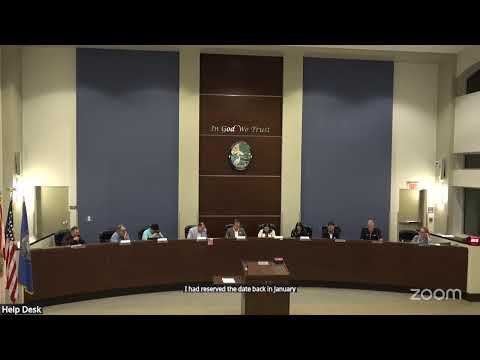
The Charter Revision Commission approved new runoff timing (general election in November, runoff second Tuesday in December) and adopted revised language allowing council members to make good-faith inquiries of town staff without a prior council resolution, after extended debate about staff independence and 'good faith' limits.
The Charter Revision Commission approved two substantive changes that affect elections and council-staff relations.
Town Attorney (Town Attorney) read the proposed runoff language placing regular town elections in November of even-numbered years and specifying that “A runoff election, if necessary, shall be held on the second Tuesday in December.” Commissioners adopted that language by voice vote with no recorded opposition, after members raised scheduling and turnout questions.
The commission also debated a rewrite of the charter’s “interference with administration” clause. The revised paragraph removes the requirement that inquiries or investigations be authorized by a prior council resolution and clarifies that council members “shall deal with officers and employees of the town who are subject to the direction and supervision of the manager solely through the manager,” except for “inquiries and investigations made in good faith.” Town Attorney read the proposed language into the record; board members and the town manager warned of risks to unity of command and potential staff confusion, while former council members and some current commissioners said the change restores reasonable constituent access to department directors.
Commissioner Fernandez said the change raised concerns about limiting council access to staff, arguing that the original wording had constrained members’ ability to obtain information. Councilwoman Ronald, drawing on past experience, said she wanted elected officials to be able to see unfiltered records rather than receiving filtered summaries. The town manager cautioned that the provision was intended as an extraordinary measure when an investigation is needed.
After extended discussion and small wording edits (including changing repeated references to 'city' to 'town'), the commission voted to adopt the revised language. The commission directed the town attorney to prepare the final redline language for the ballot materials. The measure as adopted leaves the good‑faith exception in place while removing the resolution requirement that had forced some inquiries to be processed through a formal council action.
What’s next: The newly adopted runoff wording and the revised interference-with-administration text will be forwarded for inclusion in the commission’s final ballot packages and explanatory materials. The commission asked the town attorney to circulate final text to commissioners before the next meeting scheduled for June 2.