Get Full Government Meeting Transcripts, Videos, & Alerts Forever!
Get email alerts on the Environment Air Quality topic
No spam. Unsubscribe anytime.
Residents urge Georgia EPD to deny Brightmark Thomaston permit, EPD says it will review comments
Summary
At a May 18 public hearing in Thomaston, Upson County, residents, emergency management officials and environmental groups urged the Georgia EPD to deny or tighten a draft air permit for Brightmark’s proposed 400,000-ton-per-year plastic-to-hydrocarbon facility, citing past compliance problems and public-health risks. EPD staff outlined permit limits and testing schedules and said written responses will be included in the permit record.
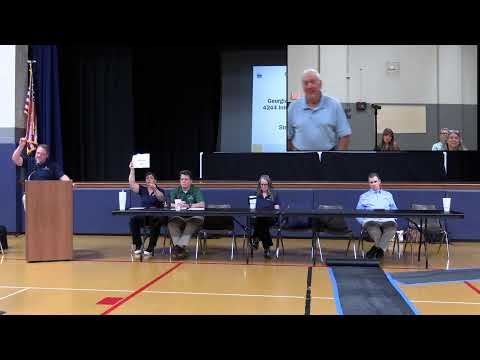
Nick Gerwin, communications specialist for the Georgia Environmental Protection Division’s air protection branch, opened a public hearing on May 18 in Thomaston, Upson County, to take comments on a draft air quality permit for the proposed Brightmark Circularity Center at the Central Georgia Business and Technology Park.
Steve Allison, manager in the EPD permitting program, presented technical details of the application and the proposed permit. Allison said the facility would include feedstock preparation, plastics conversion and refinement systems, 13 storage tanks, a boiler rated at about 12,030,000 BTU per hour, two flares, emissions controls including selective catalytic reduction and periodic performance testing for NOx, VOCs, CO and hazardous air pollutants within 180 days of start-up and at defined production and time intervals.
Allison described how the draft permit sets facility-wide limits, requires monthly and rolling 12-month emission calculations, and subjects generators and other equipment to state and federal rules. He said the EPD performed a Georgia Toxic Impact Assessment to estimate cancer risk from modeled concentrations and that the agency will respond in writing to all verbal and written comments received during the public notice period.
During the public-comment period, dozens of residents and local stakeholders urged denial or substantial changes to the permit. Tammy Boyle told EPD she opposed the permit “based on the applicant’s operational and compliance history, the technical reliability of their emissions data, and the potential impact on the whole community.” Boyle cited reported violations and missed testing at an Indiana Brightmark facility and said those records make the application’s emissions estimates unreliable for Thomaston.
Jeff Tarrant, a longtime local hospital executive who said he met Brightmark representatives, urged approval on economic and workforce grounds, saying company leaders expressed attention to employee access to health care and that the plant’s anticipated air impact was comparable, in his view, to a community hospital.
Several commenters described respiratory illnesses and said they feared the facility’s emissions would worsen health problems, lower property values and strain the volunteer fire and emergency response resources in Upson County. Richard Hickman, director of the Upson Emergency Management Agency, said mutual-aid agreements exist but that the county is not prepared for a major industrial fire and that it will take time to receive outside help; he said federal EMA funds would be used to strengthen HAZMAT capabilities but do not eliminate initial vulnerability.
A coalition representative speaking for Upson Environmental and Government Transparency, Sierra Club Georgia, Environment Georgia, Georgia WAND and Science for Georgia summarized written comments that objected to the draft permit’s regulatory classification and testing regimen. The coalition argued the draft permit does not regulate the Brightmark process as a solid-waste combustion unit under the Clean Air Act, omits enforceable limits and testing requirements for pollutants such as hydrogen chloride, dioxins and certain metals, and relies on heavily redacted performance data from another Brightmark site, which hampers independent review.
Commenters also raised questions about what would happen if Brightmark violated permit terms or later filed for bankruptcy, leaving a facility and any residual contamination in the community. Multiple speakers asked EPD to require clearer limits on permitted feedstock types and more frequent, enforceable testing.
Gerwin closed the hearing at roughly 7:30 p.m. and reiterated that EPD will consider all comments and publish written responses in the permit narrative addendum. The public comment period for the draft permit ran from April 15 through May 18; written comments received during that period will be included in the permanent permit record.