Get Full Government Meeting Transcripts, Videos, & Alerts Forever!
Get email alerts on the Land Use topic
No spam. Unsubscribe anytime.
Council approves first reading of harm‑reduction zoning amendment, raises school buffer to 1,000 feet
Summary
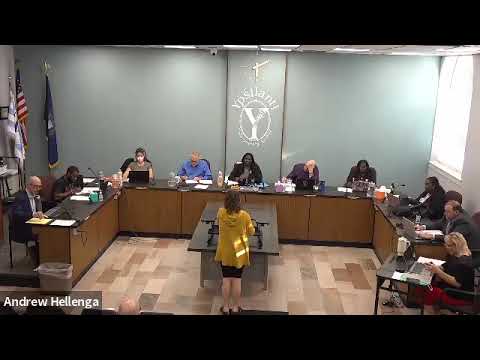
After public testimony from harm‑reduction providers and residents, Ypsilanti city council approved a first reading of Ordinance 14‑65 to define and regulate harm‑reduction and substance‑use treatment facilities; council amended buffers to 1,000 feet from schools for both uses.
Ypsilanti — City council on May 19 advanced a zoning text amendment intended to clarify how the city will treat harm‑reduction services and substance‑use disorder treatment facilities, approving the amended ordinance on first reading.
The planning commission had recommended the amendments to add definitions for services such as drug‑checking equipment and to create use‑based regulations that distinguish brick‑and‑mortar harm‑reduction service facilities from counseling and treatment centers. John, the city planner, told council the definitions were drafted to align with state public‑health terminology and to provide clearer regulatory guidance.
Dozens of residents and service providers urged approval during the public hearing. Kat Leighton, a Ward 3 resident and former Human Relations Commission chair, said the change is necessary to protect life‑saving services and to correct what she described as uneven enforcement that had previously blocked services in practice. "It allowed people like landlords and employers to continue to discriminate against people with felony and misdemeanor records," Leighton said, asking council to ensure the code language removes that ambiguity.
Council debated a separate technical question: whether harm‑reduction service facilities should have the same school‑buffer distance as substance‑use disorder treatment centers. Mayor Pro Tem Wilcoxson moved to give both uses parity at a 1,000‑foot buffer from schools, citing consistency with other use buffers and public‑safety concerns. "For consistency, I would amend to 1,000 feet for both," Wilcoxson said before the amendment passed on roll call.
The amended ordinance cleared a first reading and will return to council for a second and final reading; staff and supporters said the code change is meant to protect existing local services (including the brick‑and‑mortar site at 211 E. Michigan) while establishing operational standards and permitting pathways. Council members asked staff to confirm that accessory locations (libraries, businesses) may continue to offer Narcan or drug‑checking supplies without becoming regulated brick‑and‑mortar providers.
The ordinance packet includes the planning commission’s public‑hearing materials and references to the Michigan Zoning Enabling Act; staff said they will bring back any technical edits requested by council before second reading.