Get Full Government Meeting Transcripts, Videos, & Alerts Forever!
Get email alerts on the Alternative Response Unit topic
No spam. Unsubscribe anytime.
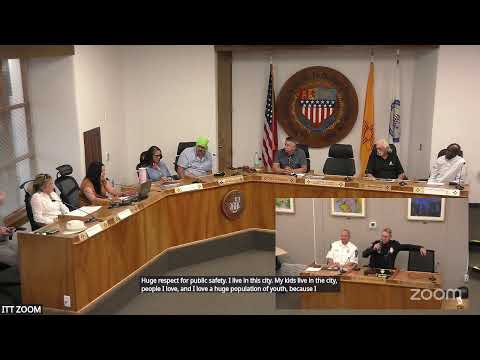
Santa Fe fire presents ARU proposal as council presses for data, staffing and possible move to community services
Summary
Assistant Fire Chief Mario Rizzo and case manager supervisor Matthew Martin presented a proposal to refine the city's Alternative Response Unit (ARU), describing goals, staffing and a plan for new job descriptions; council members asked for more data on call types, transport and case-management capacity.
Assistant Fire Chief Mario Rizzo and case manager supervisor Matthew Martin told the Santa Fe Public Safety Committee that the city's Alternative Response Unit (ARU) aims to provide a community-based behavioral-health response and long-term case management while reducing unnecessary police, fire and EMS usage.
Rizzo said the ARU 'accounts for approximately 5% of SFFD total call volume' and described the unit's purpose as connecting vulnerable residents to services and lowering repeat emergency-system utilization. He said the ARU expanded from a grant-funded pilot to permanent operation and has added two units and radio/information integrations for documentation and outreach.
'Case management is a collaborative, client-focused process of assessment, planning, facilitation and advocacy,' Rizzo said, listing examples such as connecting clients to behavioral-health and social services and coordinating follow-up care. He described a proposed organizational structure that would restore a senior assistant-chief (AC-3) oversight position, create a behavioral-health manager and convert one case-manager supervisor into an ARU supervisor overseeing ARU techs and ARU EMTs.
Committee members pressed staff for operational detail. A member asked what share of ARU calls require advanced life support; Rizzo said he did not have a solid statistic and staff would follow up. Matthew Martin described historical caseloads 'about 25 to 30 per case manager'that have shrunk as staffing dropped and said current caseloads are smaller while staff continue to run ARU responses several times per week.
Members also questioned transport and medical backfill after paramedic captains were removed from the unit. Rizzo said ARU personnel avoid calls with heavy medical need, that ARU can transport non-EMS patients in certain circumstances, and that staff would call fire/EMS when medical expertise is necessary. He said job descriptions should be completed by June and posted in July to begin hiring.
Several council members urged broader stakeholder engagement and more data. Councilor Wagner said there is 'misinformation' circulating and advocated considering moving ARU into Community Services to access different grants and partnerships; she urged listening to frontline workers and behavioral-health partners. The chair and members requested data on call lengths, evening demand, police wellness checks that required EMT assistance, and staff surveys to inform the workgroup's June report.
Rizzo and staff emphasized the proposal is a starting point and asked the committee for feedback; they said the department was committed to refining roles, measuring utilization with a UHU metric and developing a tiered career path to support retention. The committee scheduled an ARU follow-up in June with additional presentations, data on call length and case-management load, and a proposed staff survey.