Get Full Government Meeting Transcripts, Videos, & Alerts Forever!
Get email alerts on the Police Overtime Staffing topic
No spam. Unsubscribe anytime.
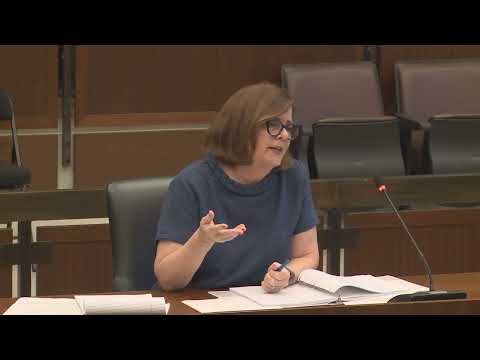
Boston councilors press police on overtime billing, collection and staffing shortfalls
Summary
At a May 19, 2026 hearing the Boston City Council Committee on Public Safety examined police overtime 'details,' collection rates and staffing levels. Boston Police staff provided figures on officer counts, billed details and collection rates and agreed to supply itemized bills and per‑officer overtime data for follow‑up.
Boston City Councilors on the Committee on Public Safety and Criminal Justice pressed Boston Police Department officials on May 19, 2026 over how the department bills and collects for private "details" and whether staffing shortfalls are driving mandatory overtime.
Chair Henry Santana opened the hearing on dockets 0591 (review of funding, reimbursement and accountability for police overtime details) and 0696 (staffing levels), and said the committee would take written comments and ask follow‑up questions to department leadership. Councilor Murphy, the lead sponsor, told the panel she sought clarity on how outside vendors pay for details and how those payments affect the city’s budget choices.
Lisa O’Brien, introduced on the record as the Boston Police Department’s Bureau of Administration and Technology chief, told the committee the department has 2,234 sworn officers including recruits and 2,102 officers available for duty. O’Brien said the department’s three‑year average attrition (primarily retirements) is about 107 officers per year, and OBM projects roughly 120 retirements for the upcoming year, with about a quarter of those being mandatory retirements.
On private details, O’Brien said vendors pay officers for work on paid days off or vacation time and that those payments are not recorded in Fund 100 unless a receivable is later deemed uncollectible. She reported that, as of April 2026, the department had billed roughly $48.79 million for details and had collected about 82% of that total so far; she said she would confirm the figures and provide an example invoice on request. O’Brien said officers are paid an hourly rate for details (she gave Type 1 details at approximately $86.81 per hour and Type 2 at about $60 per hour for police officers) and that vendors also pay a 10% administrative fee the department charges when allowed under Massachusetts law.
Councilors repeatedly pressed the department on mandatory overtime practices and whether officers can refuse such assignments. O’Brien said officers are required to work mandatory overtime and that questions about discipline for refusal or district‑level staffing choices are better answered by sworn‑side supervisors (she suggested the superintendent or bureau of field services could provide those operational details). Councilor Flynn and others described mandatory or very long shifts as a concern for officer wellness and family life and said they believed forced overtime was contributing to retention problems.
Councilor Fitzgerald proposed examining alternative shift schedules (for example, 10‑ or 12‑hour shifts with overlap) as a way to reduce overtime tied to end‑of‑shift reporting. O’Brien said the department has seen such ideas before but has not conducted a formal return‑on‑investment analysis; she said that analysis would likely require direction from the police commissioner.
O’Brien also described reimbursable overtime for large public‑safety events (distinct from privately billed details), using memoranda of understanding that list required officers and shifts for events such as the marathon or university graduations; those reimbursements are recorded as receivables until collected and therefore do not immediately affect the general fund in the same way as expense overruns.
Committee members requested more granular data, including per‑officer overtime and weekly tallies of officers exceeding the department’s 90‑hour weekly threshold, and asked the chair to transmit additional questions to the police commissioner and other sworn leadership. No formal votes or policy actions were taken; the committee adjourned and said staff would follow up with requested invoices and per‑officer overtime data.
Sources: Testimony and answers on the record from Lisa O’Brien (Bureau of Administration and Technology chief, Boston Police Department) and remarks from Councilors Murphy, Flynn, Fitzgerald, Weber and Chair Henry Santana at the May 19, 2026 committee hearing. The committee requested follow‑up materials from the department.