Get Full Government Meeting Transcripts, Videos, & Alerts Forever!
Get email alerts on the Municipal Building Renovation topic
No spam. Unsubscribe anytime.
Lock Haven work session prioritizes police locker room repairs as USDA commits $1 million
Summary
At a Lock Haven work session, council members prioritized repairing the police locker room and remediating basement water and contaminants; staff were directed to seek an ADA variance, cost estimates for lead/asbestos abatement and consultant mockups. USDA committed $1 million for renovations.
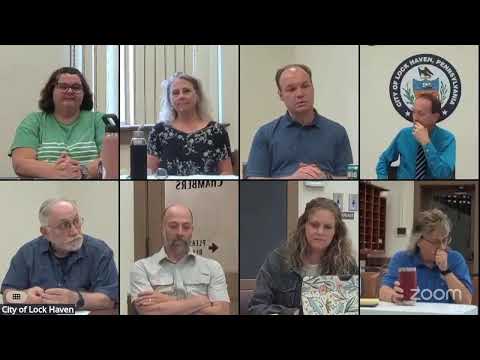
LOCK HAVEN — At a work session, Lock Haven council members and staff agreed to prioritize repairs to the municipal building’s basement police locker room, pursue an exemption process with Pennsylvania Labor & Industry if needed, and gather cost estimates and design mockups after the U.S. Department of Agriculture committed $1,000,000 for renovations.
A staff member explained that any exemption from Pennsylvania Labor & Industry would be handled at the state level and is similar in process to a zoning hearing board, and offered to consult a colleague with prior experience. “It’s a similar process to the zoning process for the zoning hearing board, but it’s at state level, and it deals with accessibility,” the staff member said.
A committee member argued much of the locker-room work could begin without full architectural plans if the work avoids major structural changes. “We don’t need anybody to tell us it’s okay to fix up the locker room in the building that we own and operate,” the committee member said, urging the council to address long-neglected repairs now rather than delay.
A police officer described deteriorated conditions in the basement facilities — holes in the floor, ripped tiles, limited sinks and showers — and said securing police records away from the basement is a priority. “I want to get the police records out of the basement,” the officer said, noting some files must be kept for decades and should be in secure, dry storage.
Council members discussed immediate remediation steps to protect records and usable space, including cleaning a clogged storm drain, redirecting downspouts, installing industrial dehumidifiers and keeping records off the floor. Staff also identified roughly 2,000 square feet of upstairs space that could be reconfigured for records and police use.
Participants noted prior feasibility work included asbestos and lead testing and suggested consulting the same investigators for rough abatement estimates to avoid costly re‑investigation. The staff member said that consultant Scott might already have the investigative information and could provide a loose cost idea.
During the meeting a committee member announced the USDA has committed $1,000,000 for building renovations. The same attendee said $500,000 from a local-share account cannot be used for renovations. Council members said the USDA commitment substantially improves available funding options and will affect how they phase projects.
The council directed staff to take several next steps: have Cindy research the process for a Labor & Industry exemption or variance; obtain abatement cost estimates for lead and asbestos; ask Scott for a mockup or rough sketches for a basement-phase design; and begin clearing and moving records so police files can be secured upstairs. No formal vote was taken at the session.
Members said the plan is to treat the basement as Phase 1, remediate water and contaminants, relocate critical records to locked space upstairs where feasible, then consider moving to higher floors with successive phases. The council agreed to return with consultant sketches and cost estimates before authorizing major construction.
The work session ended with staff assigned to compile the requested estimates and feasibility information and to report back so the council can finalize a phased renovation plan.