Get Full Government Meeting Transcripts, Videos, & Alerts Forever!
Get email alerts on the Tweetsie Trail topic
No spam. Unsubscribe anytime.
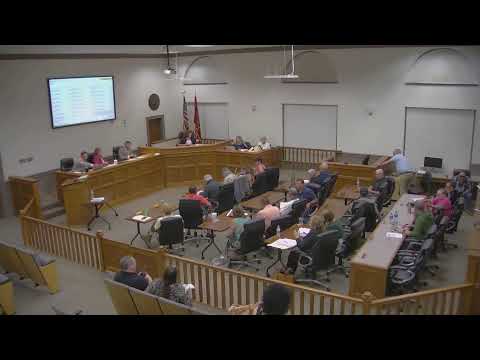
Carter County approves Tweetsie Trail master plan as a concept after hours of testimony and debate
Summary
After hours of public comment, consultants’ presentations and commissioner questioning, the Carter County Commission voted to accept the Tweetsie Trail master plan as a guiding concept — not a spending commitment — while rejecting a separate motion to halt the project and return the governor’s grant funds.
The Carter County Commission on Tuesday approved the Tweetsie Trail master plan as a concept, following a lengthy public hearing in which trail advocates, consultants and residents weighed safety, cost and grant‑use questions.
Supporters told commissioners the plan is a starting point for pursuing grants and partnerships rather than a bid to obligate county money. “This plan should not be, is not, again, not a contract, but a guiding document, a road map,” Abraham McIntyre, who identified himself as executive director of a regional trails organization, told commissioners.
Consultant David Craig, the project manager for the firm that produced the three‑volume master plan, said the documents summarize inventory, public input and recommended routes and stressed the plan does not require immediate implementation. “This master plan does not carry with it any requirements for implementation,” Craig said as he presented the final volume and cost estimate.
Several residents and trail advocates urged approval so the county could apply for state and federal grants. Tom Lamb, the state greenways and trails coordinator, told the commission the governor’s office has funded similar projects and that grant terms generally allow using funds to advance components of a larger vision: “It does not mean that you have to complete the entirety of your plan,” Lamb said.
Opponents questioned the project’s scope and the consultants’ $22 million construction estimate, arguing the county has other pressing needs. One resident called the projected economic returns “fake numbers.” At one point a commissioner moved to halt all work on the project and return the governor’s grant; that motion failed after debate about legal conditions and the grant’s allowable uses.
Commissioners repeatedly emphasized that approving the master plan does not commit county funds to construction. Chair (speaker 1) summarized the commission’s view before the vote: accepting the plan lets the county pursue grants, form an implementation task force and make future, separate decisions about any construction or land acquisition.
The commission’s approval establishes the plan as guidance to pursue grant applications, task‑force work and design phases; any future spending or right‑of‑way acquisition would require separate commission action. The commission also directed staff and the financial management committee to use the plan to pursue funding while recognizing that TDOT and other agencies will review and refine sections of the route in later design phases.
Next steps include forming a task group to coordinate grant applications and implementation planning, and continuing TDOT coordination for sections adjacent to Highway 19E where safety and shoulder requirements will require design refinement.
The vote followed hours of related business, including routine budget amendments and procurement approvals. The commission discussed follow‑up steps and scheduled future meetings to monitor grant compliance and implementation planning.