Get Full Government Meeting Transcripts, Videos, & Alerts Forever!
Get email alerts on the Water Infrastructure topic
No spam. Unsubscribe anytime.
Traverse City adopts $24 million drinking‑water project plan to pursue low‑interest SRF loans
Summary
After a public hearing, the commission approved an updated drinking‑water project plan totaling about $24 million, aimed at service‑line replacements, transmission upgrades and treatment‑plant electrical and pump improvements; staff estimated a conservative 3% loan would cost residents roughly $9.33 per connection per month.
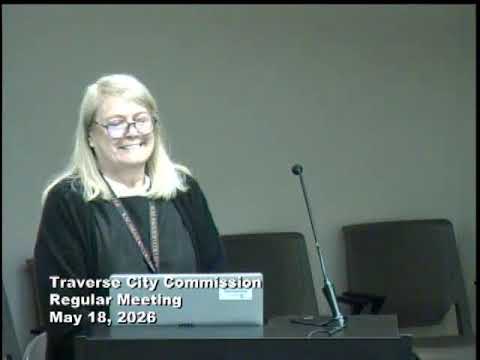
The Traverse City Commission on May 18 approved an updated five‑year project plan to seek low‑interest loans from the Michigan Drinking Water State Revolving Fund.
Art Krieger, the city’s director of utilities, introduced consultant Doug Urquhart of Hubbell, Roth & Clark, who outlined the draft plan. The program includes approximately 10 distribution projects (including galvanized service‑line replacements to address lead/corrosion risks and water‑main construction) and about eight treatment‑plant projects (electrical upgrades, pump replacements and improvements to sodium hypochlorite systems). The stated objective is to improve aging infrastructure, water quality and transmission across the city to boost reliability.
Urquhart said the plan’s total estimated cost is about $24,000,000. Using a conservative 3% loan estimate, staff presented an illustrative impact of roughly $9.33 per residential connection per month; they emphasized this is not a rate increase but an estimate used for state evaluation and planning. The schedule in the presentation shows SRF project work beginning in 2027 with distribution projects through 2029 and treatment projects into 2031.
Commissioners asked about alternatives required by the state (including “no action” and regionalization), the status of galvanized service‑line replacement (staff said initial estimates of about 1,000 lines had been revised to roughly 750 remaining, with over 500 already replaced), and the competitiveness of the SRF application process. Krieger said the plan makes the city eligible to apply and compete for grants and loans; earlier program work produced a $1.5 million grant for a previous galvanized service‑line project.
The commission opened the required public hearing, heard no public speakers on the plan, closed the hearing and then adopted the resolution authorizing submission of the application and adoption of the updated project plan. The motion passed by voice vote.
What’s next: staff will submit the project plan to EGLE by the June 1 deadline and pursue SRF funding; construction timing will depend on award schedules and coordination with planned street projects.