Get email alerts on the Transportation topic
No spam. Unsubscribe anytime.
Sun Trail A1A segment draws split public reaction; commissioners hear alternatives
Summary
County staff and FDOT described a funded Sun Trail design to expand the east‑side A1A sidewalk to a 10‑foot multi‑use path; public comment at the meeting was deeply divided, with business owners and many residents urging the board to relocate the path off Beach Boulevard and trail advocates and bicycle groups urging the board to keep the A1A alignment to connect to commercial and beach destinations.
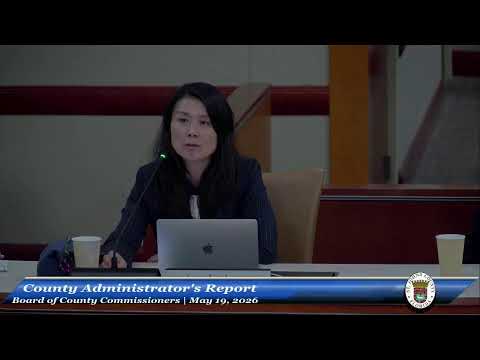
County parks and public‑works staff updated the Board of County Commissioners on the A1A (Beach Boulevard) segment of the Florida Sun Trail, summarizing design progress, FDOT funding and a community engagement plan. FDOT has funded design work and included $5.5 million for construction in its work program; county staff reported the project at 60% design with construction expected in early 2027 if the schedule holds.
The proposed design would convert the existing east‑side sidewalk into a 10‑foot shared-use path (a narrow 2‑foot utility/landscape strip plus a 10‑foot paved path behind curb) while narrowing vehicular lanes slightly. Staff said curb‑and‑gutter, ADA‑compliant crossings and signal modifications at key intersections would be included. Parks Director Ryan King and Public Works Director Greg Caldwell said the alignment was selected after a multi‑year study was completed with public input and that the A1A route provides the best beach‑and‑business connectivity and meets Sun Trail funding criteria.
Public comment that followed was extensive and sharply divided. Many business owners and East‑side residents — including restaurant operators and hotel owners — warned the trail would disrupt deliveries, block shoulders used by emergency and service vehicles, create construction impacts during tourism season and increase pedestrian/bicycle conflicts at dozens of driveway and cross‑street crossings. Several speakers urged an alternate alignment using Michaeler Boulevard, 11th Street and Pope Road, arguing it would reduce crossing points and avoid the most congested pedestrian areas.
By contrast, trail advocates, bicycle clubs and regional leaders (including former county commissioner and state Representative Cindy Stevenson and members of the River‑to‑Sea Alliance) urged the county to keep the A1A alignment. They said the corridor provides vital beach connectivity and that a 10‑foot shared path would be safer than the current narrow sidewalks and shoulders that bicyclists now use; they also warned that re‑routing the funded alignment to A1A would likely delay construction by years and risk losing FDOT funding. Several advocates noted economic benefits for restaurants and hotels from trail users who stop, eat and shop.
Commissioners did not take a final vote on the A1A alignment during the meeting. Several asked staff for follow‑up analysis — including whether national guidance (NACTO) on mixing pedestrians and cyclists had been considered and whether additional safety mitigations (signals, driveway treatments, signage, speed management and enforcement) could be added. Staff said they would continue outreach, complete design milestones per the FDOT grant agreement, and return with options and additional community engagement.
AI generated
The text on this page is AI generated. Summaries, highlights, analysis, and video transcripts are all produced from the original source material.
AI can make mistakes, so if you spot one, and we will fix it for everyone.
Note: the source content is unaltered by us. Any content source we link to, be it a video, an audio recording, or a document, is presented exactly as its publisher released it. That publisher is usually a government body, sometimes an individual official or another organisation.