Get Full Government Meeting Transcripts, Videos, & Alerts Forever!
Get email alerts on the Utilities topic
No spam. Unsubscribe anytime.
Glendale council pares back planned 10% solid‑waste hikes to 4% and 3% after fund update
Summary
After a staff presentation showing better-than-expected refuse-fund performance, Glendale’s City Council voted to reduce previously scheduled 10% solid-waste collection increases to 4% (effective July 1, 2026) and 3% (July 1, 2027). The moves follow updated revenue and expenditure projections and public questions about audits and ADU billing.
Glendale’s City Council voted on May 19 to scale back two planned solid-waste collection increases after staff reported stronger revenues and lower expenditures than projected. The resolution reduces rate increases that had been scheduled at 10% on July 1, 2026 and 10% on July 1, 2027 to 4% and 3%, respectively.
The change followed a presentation from senior public works manager Rolando Gutierrez Jr., who summarized a multi‑year cost‑of‑service analysis and said improved results produced a favorable variance that allowed a smaller increase. Gutierrez said the refuse fund had ended the most recent period with a substantially larger cash balance than was originally projected and that consultants recommended aligning future adjustments with current inflation and fund solvency projections.
Mayor Pro Tem, chairing the meeting, told the council, “It was 10% this year, 10% next year. It will be 4% this year and 3% next year,” summarizing the adopted adjustment. Council members pressed staff on the drivers of the improved outlook and on whether the timing related to the election; the city manager said the recommendation was driven by revenue/expenditure variances, not politics.
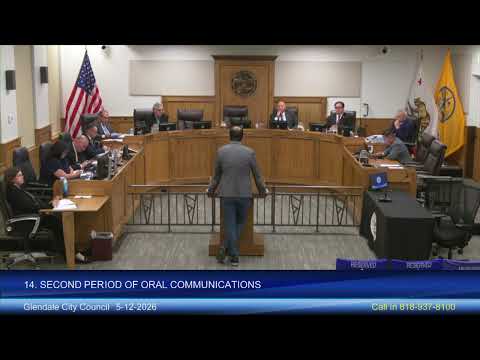
During public comment, one resident urged postponing the vote and called for an internal audit of the refuse fund and related contracts; another questioned graphs that showed a flatter increase for 2025–26 and suggested political timing. Staff and the city manager said those results tracked to higher-than-expected revenue and lower-than-expected operating costs and reiterated that the consultant’s recommendation was financial rather than political.
Council members also asked whether accessory dwelling units (ADUs) were correctly treated in the analysis; staff said the rate structure accounts for whether an ADU opts into trash service, described a recent change to the application process to allow opt‑outs and said staff is reviewing accounts retroactively for past assessments.
The resolution implementing the reduced increases passed on roll call; one council member recorded an abstention, citing not being part of the 2023 deliberations that set the multi‑year schedule. Staff said reducing the increases will preserve the fund’s near‑term solvency while maintaining reserves for future obligations such as landfill closure and organics-diversion programs.
The council’s action amends resolution 23‑75’s implementation schedule for residential solid‑waste rates and directs staff to incorporate the revised increase schedule into billing timelines. The city said the change projects a stable cash balance through 2031 under current assumptions.