Get Full Government Meeting Transcripts, Videos, & Alerts Forever!
Get email alerts on the School Policy topic
No spam. Unsubscribe anytime.
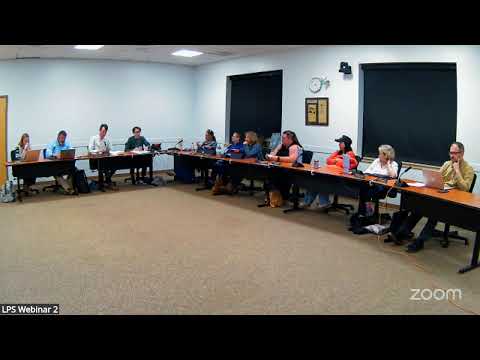
Lewiston school committee advances new temperature rules, votes to advance state-mandated student cell-phone ban
Summary
The Lewiston Public Schools committee moved forward with first readings for three policies including district credit-card rules and school temperature standards and approved a state-mandated ban limiting student phone use during class and transitions after extended debate (7–2).
Lewiston — The Lewiston Public Schools School Committee on May 18 advanced first readings of three district policies and approved a first-reading of a new student cell-phone policy that aligns with recent state law and departmental rules.
Assistant Superintendent Karen Paquette introduced the policies for a first read, saying the policy subcommittee had reviewed language covering the district’s use of credit cards, temperature standards for school buildings, and student use of cell phones and personal electronic devices. Paquette said the district has used purchase cards as part of a city account and now needs policy language inside the LPS manual to reflect that change.
“The use of credit cards…is not a new practice for us, it just needs to be in our policy manual,” Paquette said, and she emphasized the temperature and personal-device policies are timed to be in effect by the start of next school year.
Why it matters: The temperature policy requires the district to adopt minimum and maximum temperature standards, as state law requires, but does not prescribe a single implementation step because buildings and rooms heat and cool differently. Paquette and other administrators said building-level plans are expected to guide responses to extreme heat rather than a one-size-fits-all dismissal of classes.
Committee members discussed operational details at length: thresholds for when administrators must act, whether the district should adopt fixed numeric triggers, and how to handle temporary or room-specific extremes. Jay Rich, a multilingual teacher at McMahon, urged the committee not to set the upper threshold at 90 degrees, saying, “I believe 90 is really, really hot and really high, especially in a learning environment,” and he cited a neighboring district that set a lower range.
On student devices, the committee debated enforcement, emergency access, disability accommodations and the workload placed on teachers and administrators. Some members urged provisions that would permit students to carry powered-off phones for safety; others argued for stronger districtwide rules to avoid classroom-by-classroom inconsistency.
Member Janet Bowden said she opposed an across-the-board ban on carrying phones and stressed safety concerns, saying she was “so thankful my daughter's graduating this year, and I will not be voting in favor of that policy out of…just spite because I just…don’t think the state should be telling us what we should be doing in our classrooms in Lewiston.”
The committee moved the first read of the student device policy (motion by Member Julia Harper, seconded by a colleague) and approved it on a roll call 7–2. The no votes were Ward 2 (Janet Bowden) and Ward 6 (Megan Heard). Paquette noted the statute requires districts to adopt standards and that the department of education has issued rules districts must meet; the committee will return for a second reading with suggested clarifications on implementation and accommodations.
What’s next: As a first reading, the approvals do not finalize district practice. The committee and administration said they will draft implementation procedures, address details such as storage or pouch systems, and revisit language for the second reading before final adoption.