Get Full Government Meeting Transcripts, Videos, & Alerts Forever!
Get email alerts on the Police Communications topic
No spam. Unsubscribe anytime.
Aurora council adopts rule limiting police social-media posts after heated public debate
Summary
After extended public comment and council debate, Aurora City Council on May 18 adopted an amended emergency resolution directing the city manager to implement a policy restricting Aurora Police Department social-media posts of mugshots and names before adjudication except in defined public‑safety emergencies; the motion passed 6–4.
Aurora City Council on May 18 adopted an amended emergency resolution directing the city manager to update city communications policies so the Aurora Police Department does not post mugshots or suspect names on department social media before adjudication except in narrowly defined public‑safety emergencies.
The substitute resolution, introduced by Mayor Pro Tem Tim Coombs, passed after council debate 6–4. Council members Bergen, Gardner, Hancock and Lawson recorded no votes. The substitute replaces the language in the packet with directive language requiring APD and the city manager to align police social-media practices with citywide communications policies and to include exceptions for imminent public‑safety needs.
Supporters said the change is aimed at protecting due process and preventing department posts from prejudicing prosecutions or fueling biased online commentary. “In general posts… until there’s an adjudication or somebody pleads guilty, APD won’t post the mugshots and or suspect names publicly,” a council supporter explained while introducing the substitute. Public prosecutors and the city attorney had warned posts can affect the jury pool and prosecution, the council was told.
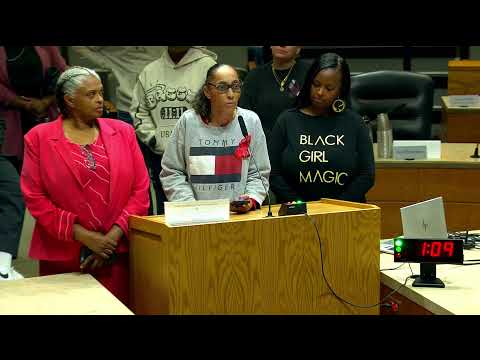
The resolution drew intense public comment. Alejandra Marina Lorena told the council that APD’s posts “are full of propaganda” and said recent department posts about an intervention program did not reflect youths’ experiences. Multiple speakers tied the policy debate to past police‑involved deaths and urged stronger civilian oversight. “Fire him, and then go **** yourself,” one resident said in remarks earlier in the evening directed at city leadership; other public commenters urged the council to pass the resolution as a minimum step toward accountability.
Opponents on council argued the measure could limit rapid public‑safety communication and make it harder for businesses and neighborhoods to learn about ongoing threats. “If there’s a person released pre‑adjudication and they’re out there in the community and potentially a threat, should the public not be able to have that information?” Council member Bergen asked during debate, urging caution about restricting timely safety alerts.
Council discussion repeatedly returned to tradeoffs between transparency and accuracy. Opponents said in past incidents prompt postings helped identify suspects or alert residents; supporters countered that editorializing and posting historical criminal records before trial damages lives and can create a hostile, racialized comment environment online. The mayor pro tem’s substitute includes language allowing immediate publication when an exception (to be defined in policy) applies, such as an imminent threat or an active search for a wanted person.
City staff and legal advisers said the Criminal Justice Records Act allows records requests for mugshots and names, but the resolution directs that the department not do that posting on its own platforms absent an exception. The council also emphasized that staff will continue negotiating policy language and that the resolution tasks the city manager with drafting the implementing policy and exceptions.
The vote was the most consequential formal action of the evening. The substitute motion was moved by Mayor Pro Tem Tim Coombs and seconded by Council member Medina; the council recorded 6 yes votes, 4 no votes (Bergen, Gardner, Hancock, Lawson). The resolution was adopted as amended and will be implemented by the city manager with guidance from city communications and legal staff.
The decision comes amid a broader community effort to increase police accountability in Aurora and follows months of public pressure and state-level legislation cited repeatedly by speakers. Council members and staff said the policy will be reviewed and may be refined as definitions for “public‑safety emergency” and other exceptions are developed.