Central dispatch reports high call volumes and improved siren performance; training planned
Summary
Central dispatch reported April call volumes (10,614 phone calls), detailed 911 call-type breakdowns, improvements to county siren testing after antenna replacement, and planned mental-health and caller-management training for dispatchers.
Central dispatch provided a data-driven operational update and a plan for improved training and system reliability.
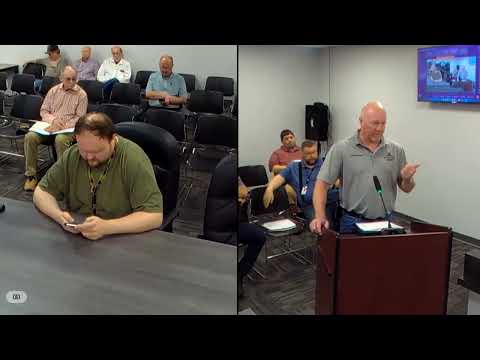
Dispatch representative Hicks reported April call totals, saying, “Our calls for service for the month of April, ended with 10,614 phone calls.” He gave a breakdown of 911 call types and agency responses and said May-to-date calls included 3,252 calls with approximately 1,400 of those being 911 calls. Hicks told commissioners EMS partners had responded to 982 emergencies in April; police calls and fire responses were also listed in the report.
Hicks and EMA Director Jackson both addressed county siren performance. Jackson said conditions are right for potential severe weather and noted mixed results from siren tests in the county; Hicks reported that a faulty antenna at dispatch had been replaced and this resolved issues affecting Marion-area sirens. Jackson said the most recent siren test had fewer failures than prior tests; that information is being communicated to the parties responsible for siren maintenance.
On training and professional development, Hicks said Marlena Tan, deputy director, completed a call-management certification in Frankfort, Kentucky, and that dispatchers will have access in July to a two-day mental-health awareness class offered by the Whitley County Sheriff’s Office; that class will be free to the county and paid for by the statewide 911 board. Commissioners asked staffing questions and were told dispatch is fully staffed with two people in training.
The update included operational context (siren reliability during severe-weather windows), personnel training plans and a recommendation to continue monitoring and communicating siren maintenance status to appropriate staff and vendors.
AI generated
The text on this page is AI generated. Summaries, highlights, analysis, and video transcripts are all produced from the original source material.
AI can make mistakes, so if you spot one, and we will fix it for everyone.
Note: the source content is unaltered by us. Any content source we link to, be it a video, an audio recording, or a document, is presented exactly as its publisher released it. That publisher is usually a government body, sometimes an individual official or another organisation.