Get Full Government Meeting Transcripts, Videos, & Alerts Forever!
Get email alerts on the Fire Services Funding And Governance topic
No spam. Unsubscribe anytime.
Pitt County weighs service districts, staffing supplements and capital aid after fire-services study
Summary
Consultants told Pitt County commissioners the county's current patchwork funding will not sustain aging apparatus and weekday staffing needs, recommending service or overlay districts, a fire commission for advisory decisions, and targeted weekday staffing supplements; staff was directed to form a small working group and return options for July.
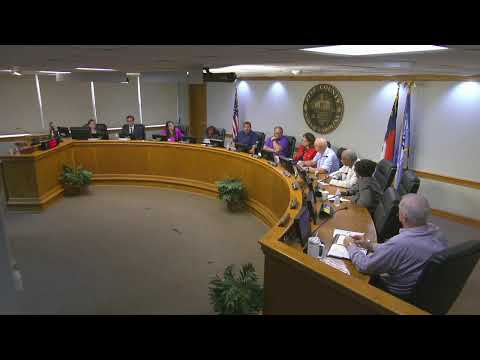
Pitt County commissioners heard a consultant review of a countywide fire-services study and spent the bulk of the meeting debating how to pay for aging equipment, maintain response levels and shore up volunteer staffing.
"We're looking for what are the most optimal tools and methods and practices," Greg Grayson of NC Fire Chiefs Consulting told the board, summarizing a 12-point report that recommended three priorities for immediate attention: the county's funding model, governance changes such as a fire commission, and weekday staffing and operational capability.
Why it matters: County data in the report show roughly 135 pieces of fire apparatus distributed across departments, with pumpers and tankers averaging about 19 years old and some exceeding 30. Consultants told the board that equipment costs and lead times have grown sharply; replacement lead times of two to three years are common and a single engine that cost $600,000 in 2019 may cost $1.2 million today. The study also found uneven district revenues (average annual fire-district revenue about $253,000) and reported that 18 of 20 departments carry debt service approaching $10 million in total.
What consultants recommended: Grayson outlined the statutory options available in North Carolina, including continued general-fund support, rural fire-tax districts (referencing Chapter 69), county service districts, overlay districts focused on capital, and, in limited cases, local bills. He also advised a data-driven cost-share formula that could weigh address points, valuation or square miles and recommended a three-year rolling average to smooth year-to-year volatility.
"Counties can do what the legislature allows you to do," Grayson said, noting that most counties pursuing a unified service district include a 15-cent cap per $100 of valuation in their resolution. He told commissioners a realistic earliest implementation timeline for a countywide unified or overlay district would be July 1, 2027, after public hearings and stakeholder work.
Local chiefs offered operational context: Several volunteer chiefs said local needs vary widely. One chief described running a 1978 brush truck in remote terrain because a high-cost new truck would not be practical there, while others described extensive maintenance and debt on newer engines. "We're where we're at because of how we've operated in the past," said a long-serving chief who asked the board to be pragmatic about replacing every older vehicle.
On staffing, the consultants and chiefs emphasized weekday gaps. Grayson noted the county's best-practice response relies on multiple departments arriving to supply the necessary personnel for structure fires; that system performs well for first-truck arrival times but the county lacks reliable data on when the full complement of firefighters (the 8'10-person consensus standard for certain responses) arrives. Several chiefs said weekdays are the most stressed period because volunteers are at work and unavailable to respond.
Commissioner questions and board direction: Commissioners pressed for concrete options. Commissioner Manning said the county's current $25,000-per-truck assistance "don't pay for the wheels" and urged more county capital support. Commissioner Weaver asked whether county-led bulk purchasing (for SCBA/air packs and turnout gear) could reduce costs; Grayson said group purchasing is widely used and can include municipalities. Daryl Alford, who described Wake County's multi-decade transition to a unified model, urged involving chiefs in any change and emphasized equitable service across geographic areas.
Governance and next steps: Commissioners debated creating a standing advisory fire commission; some chiefs said they did not favor an imposed commission, others saw value in an advisory body that vets redistricting and capital decisions before they reach the full board. The board asked staff to convene a small working group of commissioners and chiefs to refine funding and staffing options and return recommendations. The county manager said staff could present refined options at the board's July meeting and noted a chiefs meeting June 18 at Simpson Fire Department as an opportunity for additional input.
Formal actions recorded: The board recorded a motion and second to approve the meeting agenda at the start of the session and later a motion and second to adjourn; no formal vote on a funding model, service district, or fire commission was taken.
What comes next: Staff will convene the committee requested by the board, gather additional feedback from chiefs and municipalities, and return options for funding (service district, overlay district, general fund supplement) and potential weekday staffing supplements for the board's July discussion.
Attributions: Quotes and statements in this report are drawn from remarks by Greg Grayson (NC Fire Chiefs Consulting), Daryl Alford (Wake County), county staff and multiple volunteer fire chiefs who spoke during the meeting. Several chiefs (including Jonathan Landen of Fountain Road and Chief Thomas Lilly of Bethel) described local call volumes, volunteer counts and stipend/grant experience.