Get Full Government Meeting Transcripts, Videos, & Alerts Forever!
Get email alerts on the County Budget topic
No spam. Unsubscribe anytime.
County manager proposes 2.25¢ property tax increase to close multi‑million‑dollar budget gap
Summary
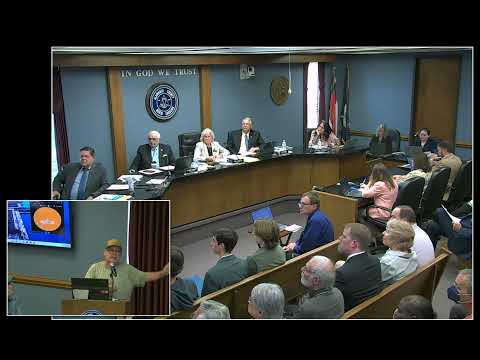
County Manager Heidi York presented a recommended FY 2026–27 budget that closes a projected revenue gap by proposing a 2.25¢ property tax increase (about $65 a year for the median home) while cutting $23 million from requests and avoiding using fund balance, the manager said.
County Manager Heidi York on Tuesday said Alamance County faces a structural funding gap she traced to repeated reliance on one‑time revenues, post‑revaluation rate adjustments and reductions in state and federal support, and recommended a 2.25¢ property tax increase to help close the shortfall.
York told the commission the county began this budget cycle with a roughly $13 million deficit that grew to about $23 million after department requests and changes in recurring revenues. She said the county has been using nonrecurring fund balance to plug gaps, leaving the unassigned fund balance projected at about 15.1% of expenditures — below the board’s 20% policy. “We must now consider rebuilding,” York said.
The manager said the 2.25¢ adjustment would generate about $6.2 million in additional revenue and equates to roughly $5.41 per month — about $65 per year for the county’s reported median home value of $289,000, York said. She emphasized the proposal is intended to create a more structurally balanced budget and to avoid further depletion of reserves: “This is the last resort that we go to,” she said.
York described a package of $23 million in recommended reductions from department requests to limit the increase. Those cuts include eliminating or not filling vacant positions, reducing contracted services and trimming operating and capital requests across departments. She said the recommended budget does not draw on fund balance to balance recurring costs.
On priorities, York proposed a slightly increased current‑expense allocation for the Alamance‑Burlington School System (ABSS) and directed $9.4 million in capital to schools and roughly $10 million for county capital projects (to be funded without general‑fund capital using previously designated courthouse reserve and other non‑general sources). The recommended current expense increase for ABSS is roughly $1.5 million, York said.
York also flagged revenue risks: a 2013 court decision, Blue Ridge Housing v. Mitchell County, can allow some apartment ownership structures to reduce property tax collections; she estimated about $550,000 lost this fiscal year with a possible increase to roughly $650,000 next year if the state does not act. She said continued reductions in state and federal funding are also pressuring local budgets.
York presented results from a county survey of 889 self‑selected respondents showing education, emergency medical services and social services as top funding priorities. She said the outreach was not statistically random but provided additional public input beyond the public‑hearing speakers.
Commissioners reacted with concern over the tradeoffs. Several members said they are reluctant to support tax increases but noted debt service, expanded service demands (911/EMS, sheriff, DSS) and the decline in recurring revenues forced difficult choices. Commissioners said they would review York’s recommendations in a work session scheduled for June 9 and hold a budget public hearing on June 1; the board aims to consider adoption on June 15.
The manager’s presentation and the board’s initial discussion do not represent a final vote on a tax rate. York’s recommended budget moves to the work‑session and public‑hearing process where commissioners can modify funding levels and the tax‑rate proposal before final adoption.