Get Full Government Meeting Transcripts, Videos, & Alerts Forever!
Get email alerts on the Campaign Finance topic
No spam. Unsubscribe anytime.
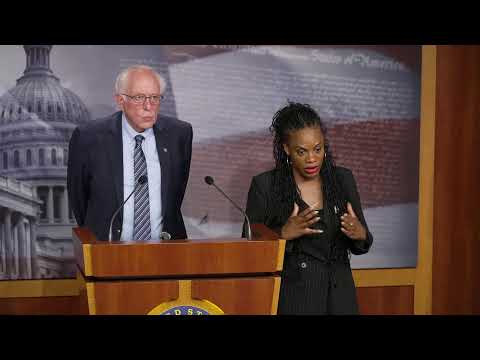
Sen. Sanders and Rep. Summer Lee introduce 'Abolish Super PACs Act' to cap big‑money influence
Summary
Sen. Sanders and Rep. Summer Lee introduced the bicameral Abolish Super PACs Act, saying it would limit Super PAC contributions and serve as an organizing tool to reduce wealthy donors' influence; the pair fielded audience questions about bribery, candidate deterrence and campaign costs.
Sen. Sanders and Rep. Summer Lee used a public forum to unveil the bicameral "Abolish Super PACs Act," arguing the legislation would curb large outside spending and help restore democratic responsiveness.
Rep. Summer Lee, who identified herself as "congresswoman for Pennsylvania's 12th Congressional District," said she introduced the measure in the House and that the Senate introduction would follow. "Specifically, the Abolish Super PACs Act would limit individual Super PAC contributions to $5,000," she said, adding the bill is intended both as a policy change and an organizing tool to push candidates and parties to respond to voters rather than wealthy donors.
Sen. Sanders framed the bill as a response to the Supreme Court's Citizens United decision and to what he described as an era in which billionaires and corporations "have poured huge amounts of money into the political process." He said those funds produce policies that favor wealthy interests "at the expense of working families," and urged public funding and other reforms to rebalance influence.
In a question-and-answer session, an audience member asked whether the scale of Super PAC spending that expects policy returns amounts to bribery. Sen. Sanders replied that small direct payments to influence a vote are "bribery" and illegal but said large-scale campaign spending is currently legal and creates what he called a "legally corrupt system."
Another attendee asked how the flood of outside spending deters ordinary people from running for office. Rep. Lee and Sen. Sanders said multimillion- and multimillion-dollar ad buys, along with disinformation campaigns, make it harder for grassroots candidates to compete and discourage civic participation. "When you have that kind of grassroots movement ... when you have that kind of grassroots movement, we're gonna win," Sen. Sanders said, stressing the need for organizing beyond the Capitol.
The panel also tied big-money influence to policy outcomes: Rep. Lee said the power of pharmaceutical and insurance industries helps explain why the U.S. lacks universal health care, and Sen. Sanders linked corporate spending to resistance on wages and climate action. A questioner referenced a Department of Justice indictment; Sen. Sanders called certain recent foreign‑policy actions "illegal and unconstitutional" and reiterated the broader link between spending and policy choices.
Both speakers emphasized that the bill is as much an organizing lever as a standalone reform. "It is absolutely an organizing tool," Rep. Lee said, adding that by making outside spending less decisive, the proposal aims to give voters and ordinary candidates a fairer chance. The event closed with the presenters urging grassroots pressure on candidates and parties to adopt the reforms.
No formal votes or motions were recorded at the forum; the Abolish Super PACs Act was presented as proposed legislation and a basis for organizing rather than as a piece that was taken up for immediate committee action. The sponsors said next steps include gathering public support and seeking additional cosponsors.