Get Full Government Meeting Transcripts, Videos, & Alerts Forever!
Get email alerts on the Transportation Emissions topic
No spam. Unsubscribe anytime.
Minnetonka staff: drive‑thru idling adds about 2,488 metric tons CO2 a year — roughly 0.44% of citywide emissions; commission weighs education, targeted rules
Summary
Staff told the Sustainability Commission that idling at Minnetonka’s 27 drive‑thru sites emits an estimated 2,488 metric tons CO2 annually (0.44% of citywide emissions). Commissioners discussed focusing on school buses and broader anti‑idling education while weighing regulatory tradeoffs.
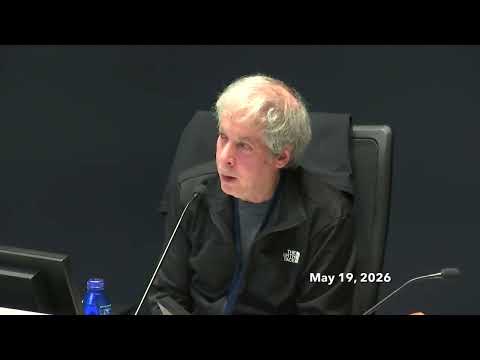
Staff presented new 2024 community greenhouse‑gas data and a staff estimate of emissions from vehicle idling at drive‑thrus to the Minnetonka Sustainability Commission at its May 19 meeting.
Ali, the city’s sustainability staff presenter, said the Regional Indicators Initiative data show Minnetonka’s community‑wide emissions have fallen about 28% from 2018 levels and that transportation is now the largest share of emissions. "Since 2024, our emissions have decreased by 28% from 2018 levels," Ali told commissioners, and then drilled down into the contribution from idling.
The staff estimate used a set of conservative assumptions — a large‑sedan idling fuel‑use rate, an average six‑minute wait per drive‑thru visit, vehicle counts from the Institute of Transportation Engineers, and a count of 27 drive‑thru sites within the city (12 banks, one pharmacy, seven coffee shops and seven restaurants). Using those inputs, Ali said, drive‑thru idling produces roughly 2,488 metric tons of CO2 annually, which staff calculated as about 0.44% of Minnetonka's community‑wide emissions and about 0.89% of the city’s transportation emissions.
Why it matters: commissioners said the number is small compared with major sources such as federal highway traffic and residential gas use, but several members emphasized local air‑quality and health impacts for vulnerable populations. Commissioner Diane pointed to school‑bus idling as an example of an impactful local source and noted state guidance: "Minnesota does have a state law for school bus anti‑idling," Diane said, urging the commission to consider targeting buses and school pick‑up queues.
Range of responses: commissioners split on whether to recommend council regulation focused specifically on drive‑thrus. Commissioner Ashley Patane argued for a layered approach: "to me, it's a yes, and" — supporting both education and proportionate regulation, starting with lower‑cost measures and reserving stronger tools if needed. Other commissioners said the city’s finite staff and funding argue for prioritizing higher‑impact actions.
Possible actions identified by staff included: an anti‑idling education campaign; source‑specific outreach to schools, delivery and bus operators; requiring applicants to report average service times; incentives for electric vehicles and chargers; green cost‑share rebates for insulation and heat‑pump adoption; anti‑idling signage; requiring indoor service options or walk‑up windows; limiting new drive‑thrus to auto‑centric corridors; and, at the extreme, banning new drive‑thrus (with caveats about unintended consequences such as longer travel or increased delivery trips).
Commission direction and next steps: commissioners used a Mentimeter poll that showed unanimous support for prioritizing transit improvements and EV readiness; support for a green cost‑share program and sustainable‑development requirements was mixed. Staff said the commission’s feedback will be provided to city council and the planning commission. Ali noted additional research is feasible if the commission wants to pursue actions that include school buses and bus‑fleet conversions.
Staff also compared mitigation options: for example, converting roughly 50 gas vehicles to EVs avoids about 180 metric tons of CO2 annually — roughly equivalent to the annual idling emissions attributed to a single restaurant — a comparison staff used to illustrate relative impact of different measures.
The commission did not adopt any regulatory changes at the meeting; members asked staff to include the commission’s comments in a report to council and to explore targeted follow‑ups (school buses, transit buses, and additional data collection) before proposing specific code changes or permit conditions.