Get Full Government Meeting Transcripts, Videos, & Alerts Forever!
Get email alerts on the Mental Health topic
No spam. Unsubscribe anytime.
Guidance Center asks county for $291,237 to sustain expanded crisis and behavioral-health services
Summary
The Guidance Center requested $291,237 in stable annual funding to sustain its Certified Community Behavioral Health Clinic services, citing growth in crisis admits, a rise in uninsured clients and a drop in Medicaid revenue that widened an operational gap.
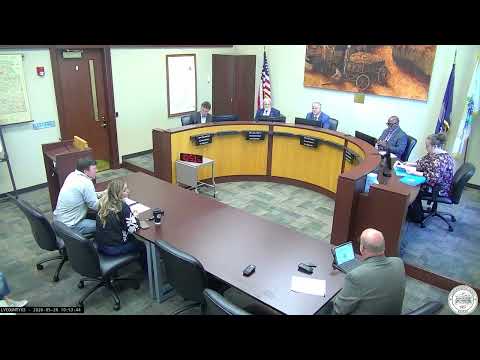
Stevie Durkin, chief executive officer of the Guidance Center, asked the Leavenworth County Commission for $291,237 in stable annual funding to help sustain the organization’s expansion under the Certified Community Behavioral Health Clinic (CCBHC) model. Durkin said the center has expanded staff and services across Atchison, Leavenworth and Jefferson counties and that an increase in uninsured clients and a 5–6% drop in Medicaid revenue have created a funding shortfall.
"Essentially, what we're asking for is continued stable funding," Durkin said, noting the center will not turn away clients who cannot pay. Chloe Gorbanski, the Guidance Center’s crisis director, said Guiding Lights stabilization center has admitted 1,199 people since it opened in September 2023 and that county residents make up the majority of users. Gorbanski cited a mobile-crisis diversion rate of just over 80 percent and described partnerships with law enforcement and jail-based clinicians to reduce ER visits and arrests.
Durkin and staff told commissioners the center is working to improve electronic health-record reporting so it can better demonstrate outcomes to the state and county. They also described a growing operational burden as more uninsured residents seek care and as federal funding through programs such as EQIP (mentioned earlier in the session in another context) fluctuates.
Commissioners asked for clarifying data (client counts by county, trends in payer mix and the center’s sliding-fee schedule). Durkin said the Guidance Center will provide the requested reports and printed survey results showing patient-reported improvements. The presentation concluded with staff offering a contact number for mobile crisis response and inviting commissioners to a public mental-health awareness fair hosted by program participants.