Get Full Government Meeting Transcripts, Videos, & Alerts Forever!
Get email alerts on the Infrastructure Budget topic
No spam. Unsubscribe anytime.
Nampa council hears public‑works budget briefings on GIS, airport, fleet and streets needs
Summary
City staff outlined a largely flat FY27 operations budget while flagging infrastructure needs: a 50‑year‑old water main failure, a planned fleet facility, airport lease increases, expanding GIS services, and stepped-up street repairs and in‑house construction to reduce costs.
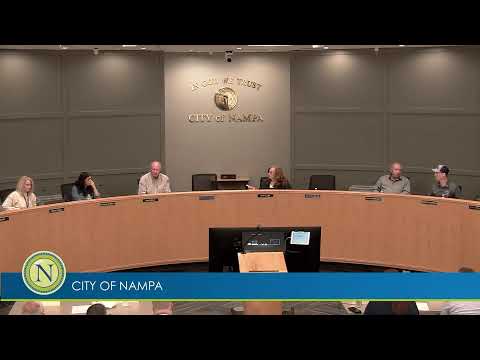
City of Nampa public‑works leaders briefed the City Council on a range of infrastructure priorities and near‑term budget items during a departmental presentation.
Tom (senior director of public works, speaker 1) opened with a recent 12‑inch irrigation break that illustrated the city’s aging water infrastructure; Tom said the failure was a 50‑year‑old pipe that “couldn’t hold up.” He stressed continuing work on water reuse plans and noted the department secured more than $30 million in water and transportation grants used in 2026.
Craig Tarter, the GIS manager (speaker 8), described the first year the GIS division is operating on its own budget and outlined core services—addressing, mapping and data management—funded by a departmental allocation (about 72% public works, 22% development services and 6% general fund). Tarter said the division is asking for a single FY27 capital item: replacement of an aging large‑format plotter.
Crystal Craig, director of transportation (speaker 2), presented the transportation portfolio: Nampa Municipal Airport (249 acres) recently secured FAA grants for taxiways and AWOS relocation, and the airport’s economic output was described from prior ITD aeronautics estimates as roughly $106,000,000 to the state. Craig said the city proposes a 4.9% rise in rents for city‑owned hangars (tied to CPI) while noting a 2–3 year waiting list for those hangars and FAA constraints on reasonable rates.
On fleet operations, the council heard that a new fleet building is at about 75% design and will expand capacity (more heavy and light bays and fabrication space). Doug Adams, fleet service superintendent (speaker 11), said the facility will help the city insource work and potentially bill outside agencies once staffing and capacity allow.
The streets and traffic sections outlined maintenance pressures: Crystal noted a target pavement condition index of ~60 for core city roads, but said many streets are in worse condition with some segments at PCI as low as 9. She proposed a multi‑year plan to build an in‑house construction crew to cut costs for smaller rebuilds (staff estimated in‑house work could cost roughly half of outsourced reconstruction on some segments).
Council members asked detailed questions about software licensing and potential IT consolidation for GIS services, the cost and funding of traffic signals and hawk crossings, and whether impact fees could pay for certain pedestrian improvements; city engineer Daniel Badger (speaker 9) noted impact fees are not eligible for some types of crossing improvements unless they meet capacity‑related criteria.
The presentation closed with staff noting limited new personnel requests and an emphasis on sustaining existing services while advancing selected capital replacements and grant‑funded projects.
The council did not take formal budget votes at the session; staff said specific budgetary proposals will return as part of the FY27 budget process.