Get Full Government Meeting Transcripts, Videos, & Alerts Forever!
Get email alerts on the Budget Policy topic
No spam. Unsubscribe anytime.
City staff outline possible firefighter separation allowance, retirement stipend history and low‑income homeowner tax relief options
Summary
Budget Performance Director Steven Howard told the City Council about the state‑authorized police separation allowance, showed a budget example for a firefighter separation allowance (a $75,000 final salary produces about $19,125/year under the police formula), summarized a discontinued local retirement stipend and described a proposed low‑income homeowner tax‑relief program modeled on neighboring jurisdictions; staff recommended further study and an actuarial review where appropriate.
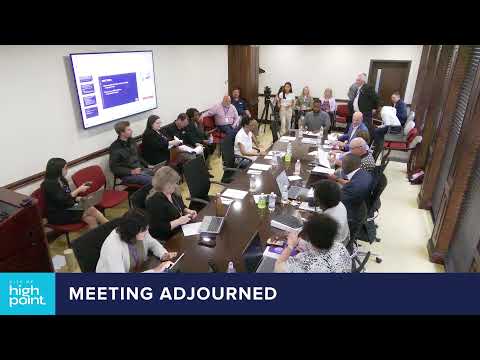
Steven Howard, the city’s Budget Performance Director, briefed the City Council on several budget items staff tracked in advance of formal adoption discussions.
Howard reviewed neighborhood traffic calming funds previously allocated in the transportation capital budget ($50,000) and then explained the city’s current police separation allowance, which he said "was authorized by the North Carolina General Assembly and was effective on 01/01/1987," outlining eligibility (30 years’ service or age thresholds) and the formula used to calculate monthly payments.
Addressing council requests about parity for fire personnel, Howard presented a worked example applying the police formula to a hypothetical firefighter with a $75,000 final base salary: "that would be $19,125 per year or just under $1,600 per month." He emphasized the figures were budget approximations and not the result of an actuarial study, and staff noted that local parameters could be set differently (eligibility years, length of payments) if the council chose to adopt a municipal program.
Howard also recounted a prior retirement stipend the city used (approved in 2003 and discontinued in 2020) and described a proposed low‑income homeowner assistance concept — modeled on Greensboro and Guilford County — that could provide up to 50% of the High Point portion of a property tax bill for eligible single‑family homeowners at ≤80% area median income, subject to application and verification. Staff said they estimate up to roughly 16,000 households could meet initial income‑based thresholds before additional filters, but that final eligibility would depend on property values and existing exemptions.
Council and staff agreed more work was needed: staff will attempt to obtain actuarial studies from peer cities (Greensboro) and provide additional cost and eligibility analysis ahead of the May 27 and June budget calendar discussions. Howard recommended council consider a June 15 adoption window to allow time for legislative and actuarial developments.
No formal policy was adopted in the session; council set follow‑up work sessions to continue the discussion.