Get Full Government Meeting Transcripts, Videos, & Alerts Forever!
Get email alerts on the Communications topic
No spam. Unsubscribe anytime.
Larkspur staff unveils baseline metrics for Climate Action communications, seeks CAF input
Summary
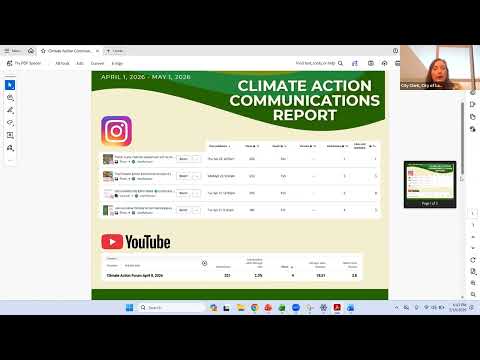
City staff presented a new Climate Action communications report that measures newsletter, Instagram and YouTube engagement and asked the Climate Action Forum to advise how to prioritize content to support the forum’s top five climate priorities.
City staff presented a first draft of a Climate Action communications report at the Larkspur Climate Action Forum meeting on May 18, outlining metrics for the city newsletter, Instagram and YouTube and asking forum members for guidance on how to prioritize content.
The assistant city manager, speaking as the forum’s primary staff lead, said the report is a baseline to track impressions, views and interactions over time and noted technical limits — including bot traffic and platform reporting changes. “Right now, viewers, if you see it, there's nothing there… impressions are probably our analyst and some machines crawling the Internet,” the staff lead said, urging members to treat the early numbers as preliminary.
Why it matters: the forum ranked community outreach and engagement among its top five priorities. Members argued that communications should both reflect staff judgment about priorities and be responsive to what residents actually click on, so the city can use limited staff and budget resources where they will have the most impact.
Members recommended several refinements staff could add to the report: include total newsletter open rates alongside item-level clicks; show benchmarks (the most-popular article by edition); and surface trends across editions so CAF can see whether engagement is improving over time. The staff lead said the city newsletter list is about 5,000 subscribers and that open rates hover around 30–40%, higher than the platform’s industry average.
Participants also suggested changing the framing and placement of content to increase impact — for example, prioritizing items that map to the CAF’s emissions-reduction priorities, or using social framing (neighbors and local success stories) to motivate action. The staff lead said some translations (for Spanish) are already outsourced to ensure accuracy for broader reach.
Next steps: staff will refine the report to include open-rate benchmarks, consider sorting options (by clicks or by staff-curated priority), and return with an updated report at a future CAF meeting. The forum expects to use the report to decide what content to highlight in newsletters, the climate corner and on social media.