Get Full Government Meeting Transcripts, Videos, & Alerts Forever!
Get email alerts on the Police Oversight topic
No spam. Unsubscribe anytime.
Charlottesville police oversight board urges shift from investigations to monitoring model
Summary
The Police Civilian Oversight Board asked Charlottesville City Council to revise Article 16 of the city code to replace an investigation-focused model with a monitor/audit/review framework, saying legal and practical barriers made hearings and compelled officer testimony impractical.
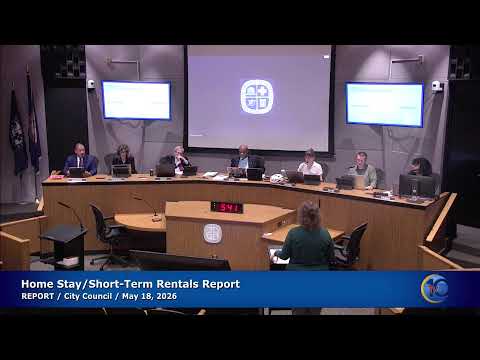
Jeffrey Frazier, chair of Charlottesville’s Police Civilian Oversight Board, told City Council on May 18 that the board is recommending a transition from an investigation-dominant model to a monitor, audit and review model of civilian oversight.
Frazier said the current ordinance—written to allow independent investigations and hearing-style adjudications—has repeatedly run into legal and practical obstacles, including conflicts over subpoena language, privacy and FOIA constraints, and limits imposed by the collective bargaining agreement for police officers. “We’ve been unable to hold a single hearing,” he said, describing years of barriers and the board’s decision to pursue a more implementable framework.
Acting director Walker (introduced by the board) gave a detailed, high-level walk-through of the proposed changes. Under the monitor/audit/review model, a small, staff-led office would perform day-to-day monitoring (for example, attending roll call, internal-affairs interviews and reviewing body-worn camera footage), conduct periodic audits of systems and data, and funnel findings to the civilian board. The board would then review those findings and make recommendations to the chief of police, the city manager or council, and issue public reports and after-action recommendations. “The goal is not to take that away, but the goal is just to transition the purpose of the hearing,” Walker said.
Walker and Frazier stressed the change is intended to produce “more oversight, not less,” by removing structural barriers that prevented effective operations. The proposed ordinance would retain the board’s subpoena authority in narrow cases (for example, to collect external evidence) but would remove language that created a conflict between compelling officer testimony and other sections that said officers could not be compelled.
Council members pressed staff on legal questions. One councilor noted that the police collective bargaining agreement contains provisions that, in practice, reintroduce procedural protections that can limit oversight. Walker acknowledged the tension, saying state law and bargaining language create a complex legal landscape and that fully adjudicative hearings would likely require broader changes to contracts, budgets and statutory authority. “It would require a major review of collective bargaining, budget, powers and authorities,” Walker said. The board’s recommendation, he added, stays within authorities the board can modify now to produce actionable results.
Frazier said the proposed ordinance and accompanying documents are being vetted by the city attorney’s office and outside counsel, and the board hopes to bring a finalized draft to council for readings by late summer. He encouraged continued community engagement and said board members are working to meet residents across the city to explain the revised approach.
The board also introduced its membership during the session: Dr. Kyle Dobson; George Diller, a retired law enforcement officer; Corinne Manor Kelly; Andrew Fry; Albie Lafave; and others whose expertise spans mental-health, research and law. Frazier said the board’s work plan will guide monthly priorities and community outreach.
Next steps: staff legal review continues; the board plans additional community engagement; council can expect the ordinance for formal readings later this summer.